
Our
Locations
-
World HQ

6700 Côte de Liesse, suite 206,
+1 514 636-1099
Montréal, Canada,
H4T 2B5 -
Ireland

Suite 3230, Building 3000, Westpark Business Campus, Shannon, Clare, V14 AN29
+353 61 475 802 -
San Marino

World Trade Center, Via Consiglio dei Sessanta,
+39 0549 942-551
99, 47891 Dogana, San Marino


Aircraft Management Companies vs. In-House Flight Departments: A Nigeria-Based Owner’s Guide
Aircraft management companies and in-house flight departments represent two legitimate routes to the same destination, and Nigeria-based owners face a genuine structural choice between them. The right answer depends on control preference, flying profile, and appetite for operational burden. This guide covers the realities of building internally, what managed models provide, and a framework for deciding.

The Decision Owners Face
Neither model is inherently better. Industry analysis consistently frames this as an owner-specific decision, shaped by how much direct control the principal wants, how frequently the aircraft flies, what aviation expertise already exists inside the organization, and how much privacy the principal requires.
For Nigeria-based owners, cross-border regulatory complexity adds a further variable. Routing across several jurisdictions raises questions about oversight, documentation, and crew standards that aircraft management companies handle routinely and internal teams must build from nothing, often under time pressure.

Building an In-House Department
An in-house flight department means hiring directly. Pilots, maintenance personnel, schedulers, and administrative staff are each recruited, trained, and retained by the owner.
Regulatory compliance sits with the owner as well, not with a third party. Vendor coordination becomes an internal function too, with fuel, maintenance providers, insurance, and ground services all negotiated and managed by the team you have built. Recruitment in a competitive crew market is its own undertaking, and retention rarely takes care of itself.
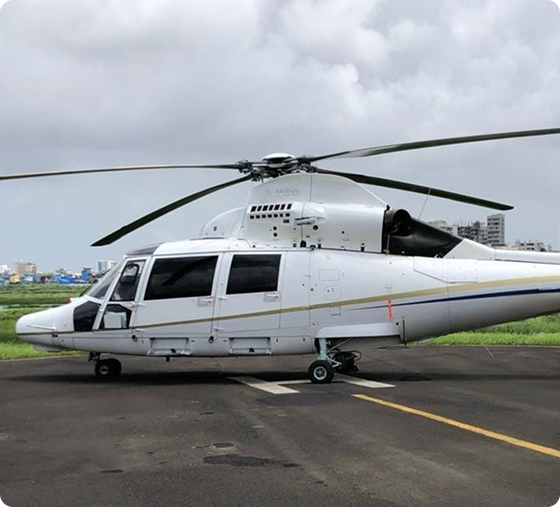
Corporate Flight Department
Direct control carries a quieter obligation. Running a corporate flight department means tracking maintenance status, operational metrics, and expenditure internally, then turning that data into reporting the principal can actually use. Someone has to own that work internally, and in practice it is rarely a part-time responsibility.
Scaling introduces friction. Adding an aircraft means further hiring and infrastructure adjustment, while reducing the fleet leaves fixed structure in place. The administrative load arrives with the control, not separately from it.

What Managed Models Provide
Business aircraft management companies bring systems that already work. Flight operations, crew scheduling, maintenance oversight, and compliance reporting run on established processes rather than procedures written from a blank page. Standard operating procedures, emergency response plans, and audit histories already exist and have been tested in service.
That removes the recruitment, training, and infrastructure burden from the owner entirely. Oversight functions stay with an experienced team whose only job is operating aircraft to a consistent standard, day after day, year after year.

Regulatory and Safety Oversight
A professional aircraft management company operates within a documented safety management system, supported by structured compliance records, incident reporting, and audit trails that withstand scrutiny across every jurisdiction the aircraft touches.
That structure matters most where obligations cross borders. Certification-backed operators bring frameworks that have been independently audited, which reduces the chance of a documentation gap surfacing at an inconvenient moment. Owners inherit that discipline rather than constructing it from scratch. Ongoing technical consultancy support keeps those systems current.

Control Versus Delegated Oversight
An in-house flight department preserves maximum direct control and, for many principals, maximum privacy. Decisions stay inside the organization, and the crew answers to the owner alone. Privacy is often the deciding factor for principals whose travel patterns carry commercial sensitivity.
Delegation trades a measure of that control for relief from administrative and regulatory load. Neither position is superior. The fit depends on which of the two the principal genuinely values more once the arrangement settles into routine.

Scaling as Needs Change
Circumstances change. Managed models absorb fleet growth, aircraft transitions, and shifting usage patterns without the owner restructuring anything, because the provider already holds depth across crew, maintenance, and operations.
Internal structures scale less gracefully. Adding an aircraft usually means recruiting again, and reducing one leaves capacity standing idle. A managed provider can redeploy crew and adjust coverage without the owner renegotiating contracts or restructuring the team. Owners anticipating fleet change should weigh that flexibility carefully when comparing aircraft management companies.

How ACASS Advises Owners
ACASS approaches this work as a consultant rather than an intermediary, drawing on 30+ years of business aviation experience across international operations. A senior member of staff holds dedicated account oversight, so the owner has one accountable point of contact throughout. Nothing is presumed about the outcome before the flying profile is understood.
For Nigeria-based owners, that role is advisory and coordinating: helping structure the decision, then supporting whichever path follows, including a turnkey aircraft management program.

When In-House Makes Sense
High-utilization operations make the strongest case for building internally. When an aircraft flies frequently on predictable routes, and the principal wants direct authority over crew and standards, an internal team can justify its structure.
Lower or variable utilization tends to point toward a managed model, where capability is available without standing infrastructure. Owners weighing the financial dimension should discuss their specifics with aircraft management companies directly rather than relying on published generalities that rarely reflect an individual operation.

Risk and Liability Factors
Liability follows responsibility. A corporate flight department handling regulatory compliance, legal oversight, and crew training without specialist guidance carries real exposure if a standard slips or a filing is missed.
Established operators mitigate some of that through documented systems, recurrent training programs, and independent audit. Insurance underwriters examine these arrangements closely, and gaps in training records surface quickly during a claim. The exposure grows across multi-jurisdiction environments, where obligations differ and no single authority holds the complete picture.

Questions Before You Decide
Three questions do most of the work. What is the realistic annual flying profile, and how might it change over the next five years? How much direct control does the principal actually want, as distinct from how much seems sensible to keep?
And what cross-border obligations does the routing create? Honest answers narrow the field faster than comparing business aircraft management companies feature by feature, and they usually point in one direction more clearly than owners expect.

Conclusion
Choosing between aircraft management companies and an in-house flight department is a question of fit, not of right and wrong. Control preference, flying profile, and regulatory complexity should drive the decision, and every owner weighs them differently. A structure that suits a high-utilization operation with deep internal expertise rarely suits one flying variably across several jurisdictions. Both routes are legitimate, and the better question is which matches how the aircraft will actually be used.
Frequently Asked Questions
-
Yes, and it is a common arrangement. Aircraft management companies with charter capability can market a managed aircraft to third-party clients during periods the owner is not flying, generating revenue that contributes toward the cost of ownership.
How much it contributes depends on aircraft type, availability, and demand across the routes involved. Owners considering this route should discuss the specifics with a specialist, since every arrangement is structured differently. Charter capability also depends on the operator holding the relevant certification.
-
It does. Enrolling an aircraft for charter introduces coordination between owner travel and third-party bookings, and the two have to be sequenced carefully.
Sound arrangements give owner scheduling priority, with charter filling availability gaps rather than competing for them. Even so, a degree of flexibility on both sides makes the arrangement work better. Owners who need complete spontaneity at short notice should weigh that before enrolling. Booking lead times and repositioning requirements both feed into how smoothly the calendar works.
-
Scale is one of the clearer advantages. Aircraft management companies operating multiple aircraft develop purchasing relationships and negotiating positions across fuel, insurance, crew training, and maintenance that a single in-house operation cannot replicate on its own volume.
Those efficiencies are structural rather than promotional. They form a distinct consideration from control, risk, or utilization, and they tend to matter more as the operational footprint widens. Access to established maintenance networks tends to shorten turnaround times as well.
-
Frequently, yes. Hybrid arrangements are well established, with internal staff retaining scheduling, crew relationships, or principal-facing duties while an external partner handles compliance, maintenance oversight, and technical functions.
The right split depends on existing internal capability and on where the owner wants attention focused. Some organizations keep a small core team and outsource everything around it. Others do precisely the reverse. The split should be documented clearly, so responsibility for each function is never ambiguous during an operational decision.
-
Generally, yes. Established providers report on a fixed cycle using standardized formats, so owners receive consistent statements covering operations, maintenance, and expenditure without having to build the reporting function themselves.
Internal departments can achieve the same discipline, but it requires someone whose role explicitly includes it. Predictability comes from process rather than from the model itself. Owners should ask to see a sample statement before committing either way, since consistency of format matters as much as frequency.
-
ACASS works with owners in an advisory capacity, helping them think through flying profile, control preferences, and cross-border regulatory obligations before a structure is chosen. That guidance draws on 30+ years of business aviation experience across international operations.
Where owners are based in Nigeria, the role is consultative and coordinating. ACASS helps map the available options and, once a direction is set, supports the transition through aircraft management and related services. The conversation starts with questions rather than recommendations.
