
Our
Locations
World HQ

6700 Côte de Liesse, suite 206,
+1 514 636-1099
Montréal, Canada,
H4T 2B5Ireland

Suite 3230, Building 3000, Westpark Business Campus, Shannon, Clare, V14 AN29
+353 61 475 802San Marino

World Trade Center, Via Consiglio dei Sessanta,
+39 0549 942-551
99, 47891 Dogana, San Marino


Bombardier Challenger 350: Buyer & Owner Guide
The Bombardier Challenger 350 is the super midsize category’s benchmark aircraft — and a proven platform for operators who Own Your Journey®. This guide covers everything buyers, owners, and operators need to know.
Connect With a Specialist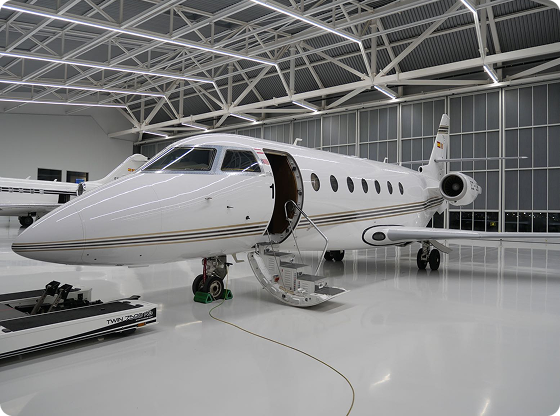
Challenger 350 Overview and History
The Challenger 350 is a Bombardier super midsize business jet that entered service in 2014 as the successor to the Challenger 300. Certificated under the BD-100-1A10 type designation by Transport Canada, the FAA, and EASA simultaneously, it launched with NetJets as launch customer, reached its 300th delivery in 2019, and claimed 58% of the super midsize segment at peak. The Challenger 3500 is its successor.
Specs and Performance
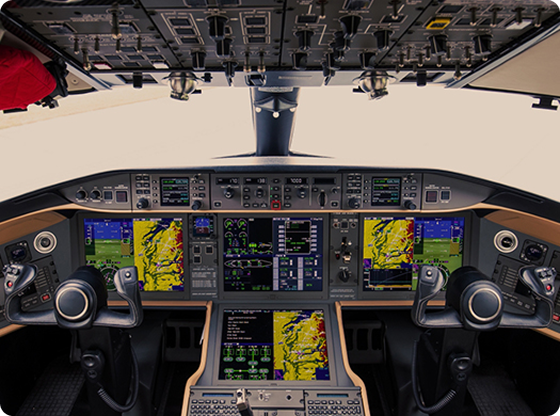
Two Honeywell HTF7350 turbofans produce 7,323 lbs of thrust each, delivering FADEC-enhanced reliability over the Challenger 300’s HTF7000. Range reaches 3,200 nm NBAA IFR with eight passengers, extending to 3,421 nm at reduced payload. Maximum cruise speed is 470 KTAS, service ceiling 45,000 ft. The stand-up cabin measures 7.17 ft wide and 23.7 ft long. Takeoff distance is 4,835 ft at sea level.
Selling Your 350
The Bombardier Challenger 350’s position in the super midsize market makes it one of the more liquid pre-owned business jets available today. A strong type certificate, high fleet density, and consistent operator demand support resale values across model years. ACASS aviation advisors bring $2B+ in completed transactions and market intelligence across 56 countries to every sell-side mandate.
Challenger 350 Cabin: Comfort Engineered for Performance
A Cabin Designed Around the Passenger
The Bombardier Challenger 350 seats eight passengers in a double-club configuration, delivering the spatial balance that serious business travel demands. Every element of the interior — from the forward galley to the full lavatory — reflects a deliberate focus on productivity and comfort across missions of any duration.
Pressurization and Noise Reduction
Cabin altitude at cruise is pressurized to 5,990 ft, a specification that meaningfully reduces passenger fatigue on longer legs. Paired with active noise reduction technology, the Challenger 350 creates an onboard environment that supports focus, rest, and conversation without compromise — arriving refreshed is part of the mission.
Light, Space, and Accessible Baggage
Windows sized 20% taller than the Challenger 300 bring a measurable improvement to the sense of space and natural light throughout the cabin. Combined with 106 cu ft of in-flight-accessible baggage storage, the Challenger 350 accommodates the practical realities of executive travel without sacrificing the interior experience.

350 vs. 300
The Challenger 350 shares the BD-100-1A10 type certificate with the Challenger 300, allowing transitions via differences training rather than a full initial course. Key changes: the HTF7350 delivers 7.3% more takeoff thrust and improved FADEC reliability; canted winglets add 900 lbs of full-fuel payload; interior refinements include taller windows and improved noise insulation. The large combined fleet supports strong parts availability and maintenance infrastructure globally.

Challenger 350 vs. Challenger 3500
The Challenger 3500 introduced auto-throttles, Nuage seating, 4K screens, voice control, wireless charging, and approximately 200 nm of additional range. Auto-throttles are the most operationally significant change, reducing crew workload during critical flight phases. Buyers weigh new-build technology and warranty protection against the proven performance of a pre-owned Challenger 350. Connect With a Specialist for current market guidance through our Aircraft for Sale page.
Ownership in Practice
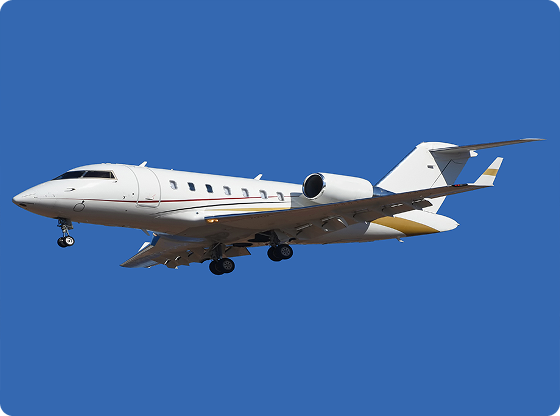
Owning a Challenger 350 means managing crew scheduling, regulatory compliance, maintenance oversight, and safety management continuously. The aircraft’s transatlantic capability makes professional management especially relevant for international operators. Part 91 and Part 135 carry distinct operational implications. IS-BAO Stage 3 is the recognized quality benchmark for management companies at this level — ACASS holds both IS-BAO Stage 3 and ARGUS Gold. Connect With a Specialist.
Frequently Asked Questions
-
As the Challenger 350 is no longer in production, acquisition is through the pre-owned market. Key evaluation factors include airframe hours, engine cycles remaining on the Honeywell HTF7350 maintenance program, avionics configuration, and most recent major maintenance status. Aircraft with current maintenance and recent interior updates differ substantially in operational readiness from those with deferred work. ACASS aviation advisors guide buyers through full pre-acquisition analysis.
-
The 3,200 nm NBAA IFR range places New York to London (approximately 3,459 nm) at the aircraft’s outer capability. With eight passengers and standard reserves, the mission exceeds published range. With reduced payload and favorable winds, it is operationally feasible. Most operators flying this route at full load plan a fuel stop at Goose Bay or Keflavik as standard procedure rather than contingency.
-
No. The Challenger 350 requires two pilots under the BD-100-1A10 type certification. This is a regulatory fixed point — dual-pilot crew is required for all operations regardless of captain experience or mission profile. Owners should account for two type-rated pilots as a fixed operational commitment from the moment of acquisition, including during training events, crew absence, and international operations requiring specific qualifications.
-
The Challenger 350’s maximum certified altitude is 45,000 ft. At maximum takeoff weight, initial cruise is typically at FL430, climbing to FL450 as fuel burns off. The aircraft reaches FL410 in approximately 18 minutes from maximum takeoff weight. Operating at this altitude positions the aircraft above most commercial traffic and convective weather, improving both mission predictability and passenger comfort on extended flights.
-
The Challenger 3500 adds auto-throttles, Nuage seating, 4K screens, voice control, wireless charging, and approximately 200 nm of additional range. Auto-throttles represent the most operationally significant change, reducing crew workload during approach and departure. The Challenger 3500’s cabin redesign has been widely recognized for its elevated passenger-centric aesthetic. Buyers weigh current technology and new-build warranty protection against the proven performance record of a pre-owned Challenger 350.
ACASS — Own Your Journey®
