
Our
Locations
-
World HQ

6700 Côte de Liesse, suite 206,
+1 514 636-1099
Montréal, Canada,
H4T 2B5 -
Ireland

Suite 3230, Building 3000, Westpark Business Campus, Shannon, Clare, V14 AN29
+353 61 475 802 -
San Marino

World Trade Center, Via Consiglio dei Sessanta,
+39 0549 942-551
99, 47891 Dogana, San Marino


Private Jet Rental Cost in Canada: Complete 2026 Pricing Guide
Private jet rental cost in Canada varies by aircraft category, route, positioning, and season. This guide breaks down every variable that shapes your quote.
- Turboprops (King Air 350) suit short regional routes;
- Light jets (Phenom 300, Citation CJ3) cover routes under 2.5 hours;
- Midsize jets (Citation Latitude) handle cross-province travel;
- Super-midsize jets (Challenger 350) add coast-to-coast range;
- Heavy jets (Global 6000, Gulfstream GIV) serve transcontinental and transatlantic missions;
- VIP airliners suit large groups on ultra-long-range routes.
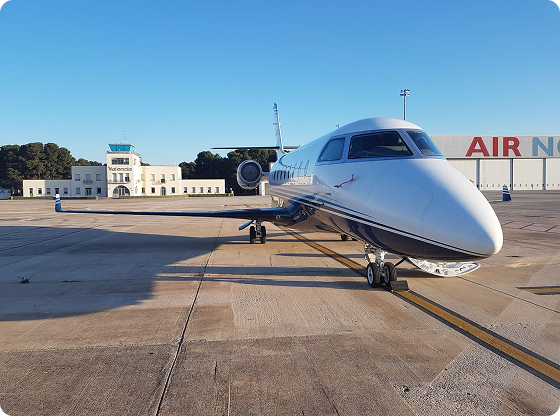
How Much Does It Cost to Rent a Private Jet in Canada?
Private jet rental cost in Canada depends on aircraft category, route, positioning, and time of year. Each tier — turboprop through heavy jet — carries meaningfully different operational overhead, and the headline hourly rate is only the starting point. Repositioning fees, de-icing, landing charges, fuel surcharges, and HST all contribute to the final invoice. Contact ACASS for a complete, itemized breakdown specific to your route and requirements.
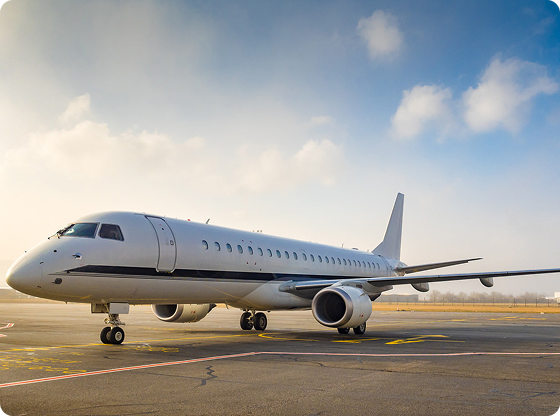
Private Jet Rental Cost by Aircraft Category
Business jet charters in Canada spans six categories.
Contact ACASS for a quote specific to your requirements.
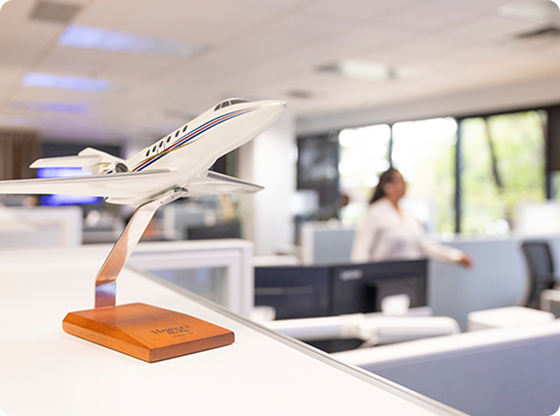
Light Jets — What to Expect to Pay
Light jets carry four to six passengers and perform best on routes under 2.5 hours — city pairs like Toronto to Ottawa, Toronto to Montréal, and Vancouver to Calgary. The Phenom 300 and Citation CJ3 are among the most common in Canadian charter fleets. Positioning, peak season demand, and international customs requirements are the primary factors that move costs within this tier. Connect with a specialist to explore available options.
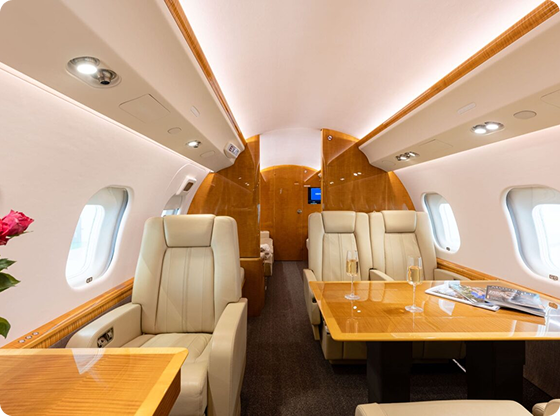
Midsize Jets — Pricing Overview
The midsize category handles most Canadian business charters, carrying six to eight passengers coast-to-coast. The Challenger 350 — technically a super-midsize — is the fleet workhorse, with range and cabin width that compete with smaller heavy jets. A Toronto to Vancouver charter involves five cost components beyond the hourly rate: flight hours, repositioning, landing and handling fees, de-icing (October through April), and HST. Contact ACASS for a line-item quote.

Heavy Jets and Long-Range Aircraft — Cost Guide
For transatlantic travel, large executive groups, or transcontinental non-stop missions, heavy jets are the operational standard. The Global 6000, Gulfstream GIV, and Gulfstream G650 are the primary Canadian market reference points — carrying ten to 14 passengers with intercontinental range and full stand-up cabins. Heavy jet demand concentrates at Toronto Pearson and Vancouver International. Contact ACASS for a personalized assessment of routes, aircraft, and operational requirements.
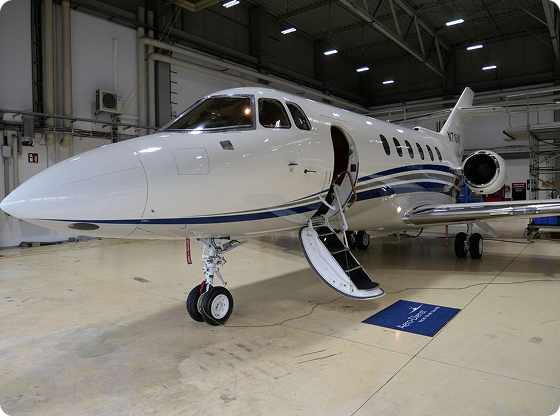
What Drives Private Jet Charter Pricing in Canada?
Charter quotes vary because multiple independent variables stack. Aircraft type sets the base rate; repositioning adds a ferry leg if the aircraft isn’t based at your departure airport; de-icing applies October through April; landing and handling fees differ by airport; fuel surcharges fluctuate with energy markets; crew overnights appear on multi-day trips; and HST applies to all domestic Canadian flights. Before accepting any quote, ask what is and isn’t included.
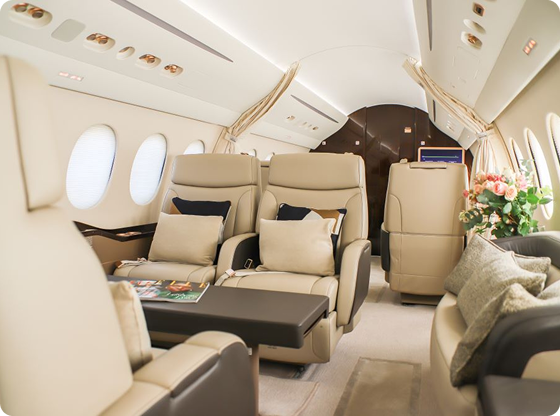
Empty Leg Flights — How to Save on Private Jet Travel in Canada
An empty leg occurs when a business jet repositions — returning to base or ferrying to its next charter. Operators offer these legs at a discount to offset operating costs on flights that would otherwise travel empty. The trade-off is fixed routing and timing: the aircraft goes where the operator needs it, on their schedule. High-frequency corridors include Toronto to Montréal, Calgary to Vancouver, and Toronto to Vancouver.
Explore available empty leg flights through ACASS:

On-Demand Charter vs. Charter Account — Which Costs Less?
On-demand charter offers complete flexibility — book when needed, no ongoing commitment. It suits travellers making one to three private flights annually or those with unpredictable routing. Charter accounts provide pre-negotiated rate structures and priority access to managed aircraft, favouring corporate clients on consistent, high-volume routes. Committing to a fleet that doesn’t match your travel pattern erodes savings. The right model depends on your utilisation, routing, and relationship with the operator.
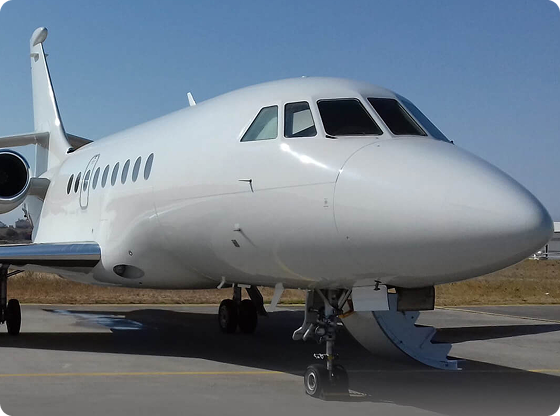
How ACASS Approaches Private Jet Charter Pricing?
As a Canadian AOC operator with managed aircraft, ACASS has direct visibility into fleet availability and actual operating structures that intermediaries lack. Quotes state clearly what is and isn’t included — repositioning, de-icing, handling fees — before any commitment is made. ACASS holds IS-BAO Stage 3 and ARGUS Gold certifications. The objective isn’t to place a single booking. It’s to identify the access model that fits your actual travel pattern.
Frequently Asked Questions
-
Private jet rental cost per hour in Canada depends on the aircraft category, the specific route, positioning requirements, and time of year. Turboprops represent the most accessible entry point for short regional routes, followed by light jets for intra-provincial travel, midsize jets for coast-to-coast routes, and heavy jets for intercontinental missions. Each tier carries meaningfully different operational overhead — fuel burn, crew requirements, and maintenance cycles all scale with aircraft size, and those costs are reflected in the hourly rate. Knowing how much a private jet rental costs, however, requires looking beyond the hourly rate. Repositioning fees, de-icing, landing charges, fuel surcharges, and HST all contribute to the final invoice. Contact ACASS for a complete, itemized breakdown by route and aircraft category.
-
The lowest private jet rental prices in Canada come from three sources: turboprops on short regional routes, empty leg flights on corridors that match your schedule, and charter accounts for travellers who fly frequently enough to qualify for pre-negotiated rates. Turboprops are the most affordable aircraft category, well-suited to routes under 90 minutes. Empty legs offer meaningful savings over on-demand rates, but require flexibility on route and departure time. The cost of private jet rental also decreases when you avoid peak-demand periods — ski season and major holidays — when availability tightens and rates rise across categories. Booking with adequate lead time gives operators room to source better-positioned aircraft at more competitive rates. Connect with an ACASS specialist to explore which access model best fits your travel pattern.
-
Most quoted private jet charter pricing in Canada covers flight time only. HST applies to domestic flights in Canada and is almost always listed as a separate line item on the final invoice. De-icing — a routine procedure from October through April — is an additional charge that varies by aircraft size and the severity of weather conditions. Private jet rental prices also typically exclude landing and handling fees, repositioning charges if the aircraft is based elsewhere, fuel surcharges, and crew overnights on multi-day trips. Before accepting any quote, ask the operator to confirm which of these items are included and which will appear on the final invoice. A transparent operator will walk you through each line item without hesitation.
-
A private jet charter is a flight arranged specifically for you, with full control over the aircraft, route, and departure time. An empty leg is a repositioning flight that an operator discounts because the aircraft would otherwise travel empty between assignments. Private jet rental prices on empty legs can be meaningfully lower than equivalent on-demand rates, but the route and schedule are fixed by the operator’s operational need — not your preference. Empty legs work best for flexible travellers who need to move along a corridor where positioning flights occur regularly, such as Toronto to Montreal or Calgary to Vancouver. The trade-off is straightforward: savings in exchange for schedule control. Signing up directly with an operator for empty leg notifications is the most reliable way to access available positioning flights.
-
For most travellers, the private jet charter cost is lower than ownership below a threshold of annual flight hours where the capital commitment becomes economically justifiable. Below that threshold, the cost of acquisition combined with maintenance, storage, insurance, crew salaries, and regulatory compliance makes ownership significantly more expensive on a per-hour basis than equivalent charter access. Above that threshold — when annual utilization becomes substantial and consistent — the economics begin to favour a managed aircraft program, particularly when the aircraft is placed in a charter management program to offset fixed costs. The right answer depends on your specific utilization pattern, routing, and financial structure. For travellers weighing the options, leasing is a useful intermediate step worth comparing before committing to either model.
