
Our
Locations
World HQ
6700 Côte de Liesse, suite 206,
+1 514 636-1099
Montréal, Canada,
H4T 2B5Ireland

Suite 3230, Building 3000, Westpark Business Campus, Shannon, Clare, V14 AN29
+353 61 475 802San Marino

World Trade Center, Via Consiglio dei Sessanta,
+39 0549 942-551
99, 47891 Dogana, San Marino


Charter a Private Jet or Own a Super Midsize? A Financial Analysis
Whether you are evaluating a super midsize jet for the first time or weighing ownership against another charter season, this guide provides the framework you need.
What Does It Actually Cost to Own a Super Midsize Jet?
Ownership cost in the super midsize category separates into three layers: acquisition and financing, annual fixed costs, and variable costs per flight hour. Fixed costs — crew, insurance, hangar, training, and management fees — accrue regardless of utilization. Variable costs scale with flight activity. How fixed costs amortize across annual hours drives the ownership-versus-charter comparison. Buyers who collapse these layers into a single figure consistently underestimate total cost of ownership.
The Cost to Charter a Private Jet in the Super Midsize Category
Charter rates in this category vary based on aircraft type, route, season, and operator. The occupied hourly rate is only the starting point — repositioning legs, de-icing, premium catering, and overnight crew expenses affect the realized trip cost materially. Charter also provides fleet flexibility across cabin categories without a capital commitment. The trade-offs: no asset accumulation, no depreciation benefit, and no guaranteed availability during peak-demand periods.
The Breakeven Point: When Does Ownership Make Financial Sense?
The breakeven threshold depends on your full fixed cost stack, variable cost per flight hour, available tax treatment, and whether a charter revenue offset program is in place. At lower utilization, charter typically delivers better economics. As annual hours increase — particularly when a charter offset program is active — ownership economics strengthen meaningfully. The critical variable is whether cost is defined as operating cost only, or the full economic picture inclusive of capital and depreciation. Connect with a Specialist for a scenario modeled to your specific situation.

Tax Benefits and Depreciation: The Ownership Advantage Most Buyers Underestimate
Tax treatment is where business jet ownership economics shift most significantly for qualified buyers. Bonus depreciation under Section 168 can allow a qualifying aircraft to be fully expensed in the acquisition year. Aircraft outside that eligibility typically depreciate on a front-loaded MACRS schedule. Personal use limits deductibility — business-use proportion governs the available deduction. Tax law changes frequently; ACASS recommends partnering with an aviation-specialized CPA to model the benefit specific to your use profile and transaction structure.
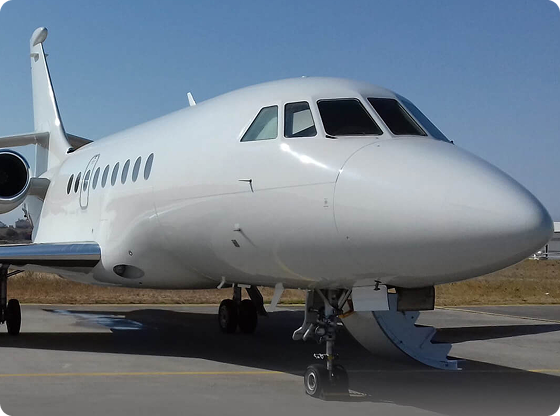
Fractional Ownership: The Middle Ground for Super Midsize Jet Access
Fractional programs allow buyers to purchase a share in a specific aircraft, entitling them to a proportional number of annual flight hours. Share acquisition cost, occupied hourly rate, and monthly management fees are the three cost layers to assess together. Fractional is best suited to mid-range utilization — where charter availability feels unreliable but full ownership is premature. At higher annual hours with a consistent mission profile, full ownership with a charter offset program typically delivers stronger long-term economics.
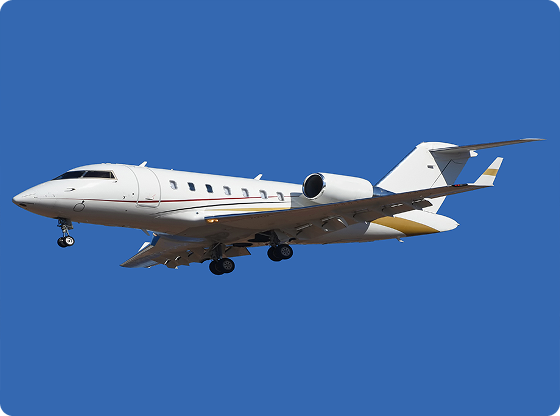
How Charter Revenue Offsets Ownership Costs
When an owner places their aircraft on a Part 135 certificate or under an AOC holder’s operating authority, it generates revenue during owner downtime. That revenue offsets annual operating costs, reducing the effective cost of ownership materially. Variables include aircraft type, base location, market demand, seasonal patterns, and the operator’s commercial capability. ACASS is an AOC holder and direct operator — not a broker — giving clients access to in-house charter operations with fully aligned commercial incentives. Contact ACASS’s aircraft management team to project revenue potential for your specific aircraft and base.

ACASS Perspective: Matching the Right Access Model to Your Mission
Charter suits lower annual utilization and unpredictable mission profiles. Fractional suits mid-range utilization where guaranteed access matters and full ownership remains premature. Ownership with management is optimal at higher annual hours with a consistent mission — particularly where tax treatment is meaningful and a charter offset program is in place. ACASS manages operations, maintenance, crew, and charter revenue generation while owners retain schedule priority and full asset control, backed by $2B+ in global transaction experience. Connect with a Specialist to model the right structure for your situation.
Frequently Asked Questions
-
The ownership-versus-charter threshold in the super midsize category depends on several variables: the full fixed cost stack, variable cost per flight hour, available tax benefits, and whether a charter revenue offset program will be in place. Commonly cited thresholds are a simplification — buyers with meaningful tax benefits from bonus depreciation may find ownership compelling at lower utilization, while those without a charter offset program may require a higher annual hour threshold. ACASS models each scenario based on your specific aircraft, base, and utilization profile. Connect with a Specialist to develop the analysis.
-
Super midsize charter rates reflect aircraft type, route length, repositioning requirements, season, and operator. The occupied hourly rate is the starting point, but realized trip cost depends on what is included. Fuel, crew, insurance, and standard catering are typically covered; repositioning legs, de-icing, premium catering, and overnight crew expenses are often additional. An accurate annual charter budget requires modeling full trip cost across a realistic itinerary. Speak with an ACASS specialist to explore charter options for your specific routes.
-
Ownership costs fall into three layers: acquisition and financing, annual fixed costs (crew, insurance, hangar, training, and management — paid regardless of utilization), and variable costs per flight hour (fuel, maintenance reserves, landing fees, and handling). The relationship between fixed and variable costs, and how they amortize across actual flight hours, determines whether ownership economics are favorable at a given utilization level. ACASS provides transparent, fully loaded cost structures as part of every ownership consultation.
-
Yes. Placing the aircraft on a Part 135 charter certificate or under an AOC holder’s operating program allows it to generate revenue during the owner’s downtime. Charter revenue can offset a substantial portion of annual operating costs, depending on market demand, base location, aircraft type, and the operator’s commercial capability. This approach requires a qualified management company to handle operations, regulatory compliance, scheduling, and commercial pricing. ACASS operates as an AOC holder with in-house charter capability and fully aligned commercial incentives.
-
Fractional ownership makes sense for travelers who fly a moderate number of annual hours, want guaranteed availability, and are not yet positioned for full ownership. Share acquisition cost, occupied hourly rate, and monthly management fees must be evaluated together against both charter and full ownership at equivalent utilization. At higher annual hours with a consistent mission profile, full ownership with a charter offset program typically delivers stronger long-term economics. ACASS can model the comparison for your specific flight profile.
