
Our
Locations
World HQ

6700 Côte de Liesse, suite 206,
+1 514 636-1099
Montréal, Canada,
H4T 2B5Ireland

Suite 3230, Building 3000, Westpark Business Campus, Shannon, Clare, V14 AN29
+353 61 475 802San Marino

World Trade Center, Via Consiglio dei Sessanta,
+39 0549 942-551
99, 47891 Dogana, San Marino


How to Choose the Right Light Jet for Your Mission
Before comparing models or engaging a consultant, define the mission first — routes, passenger count, and airport access determine whether a light jet fits your operation.
What Is a Light Jet?
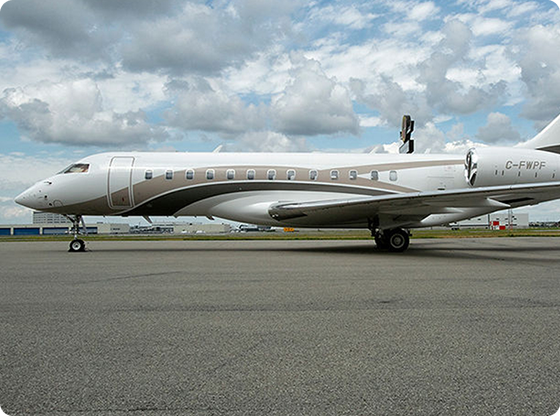
Light jet aircraft are business jets with a maximum takeoff weight of up to approximately 20,000 lbs, seating four to eight passengers in a standard club configuration with galley and lavatory. Range spans approximately 1,000 to 2,500 nautical miles at cruising speeds of 400 to 450 knots — positioning the category above very light jets and below midsize aircraft, with a full business jet feature set and a smaller operational footprint.

Who Flies Light Jets?
The light jet category serves clients who fly frequently, fly regionally, and need schedule control that commercial aviation cannot provide. Small executive teams on domestic legs — Montréal to Toronto, Calgary to Vancouver — and corporate flight departments on short-haul assignments find strong value here. The category is not suited to transatlantic routing, groups larger than eight, or transcontinental range without a technical stop. Understanding those boundaries is how buyers avoid the wrong acquisition.

Key Light Jet Models Available Today
Model selection follows mission profiling. The Cessna Citation M2 Gen2 and CJ4 Gen2 are the North American regional market’s most established platforms, valued for short-field performance. The Embraer Phenom 300 leads global delivery volume and offers category-leading range with modern avionics, while the Phenom 100 suits shorter domestic missions. The Learjet 75 occupies the upper boundary of the category with a speed advantage for time-sensitive operations; Bombardier has ceased new production, making pre-owned inventory the primary acquisition pathway.
New vs. Pre-Owned Light Jets
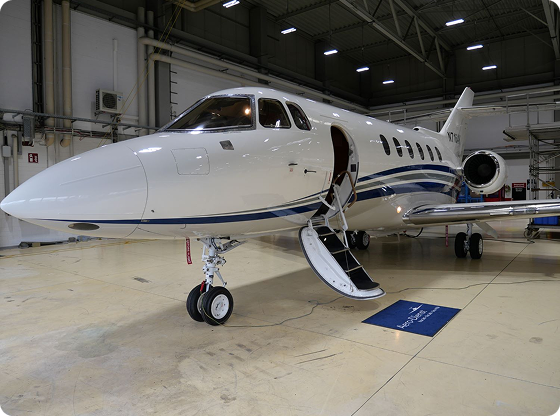
Pre-owned light jets represent the majority of the accessible market. Priority evaluation criteria are total airframe time, engine programme enrollment, avionics currency, and maintenance history continuity — an aircraft on a structured maintenance programme can outperform a lower-hours one with documentation gaps. New aircraft offer factory warranty and a clean configuration baseline. Connect with a Specialist before committing to any light jet acquisition.

How ACASS Supports Your Light Jet Journey
Own Your Journey® describes the full trajectory from first conversation to operational aircraft. ACASS serves as a consultant — not a broker — bringing 30+ years of experience, $2B+ in transactions across 56 countries, and credentials including IS-BAO Stage 3 (2017), ARGUS Gold (since 2013), and IADA Accredited Dealer status (since 2019). Air Operator Certificates in Canada, Ireland, and San Marino enable managed aircraft to generate charter revenue legally. Explore aircraft management for your light jet.

Managed vs. Owner-Operated: Your Light Jet Path
Owner-operated means full operator responsibility for airworthiness, crew qualifications, maintenance, and regulatory compliance — suited to established flight departments with dedicated staff. Managed operation means ACASS assumes those obligations under its own Air Operator Certificate, handling crew, maintenance, insurance, and safety management. Charter revenue offset — available only through the managed model — partially offsets fixed ownership costs. Low annual flight frequency, no dedicated crew, and interest in charter offset typically point to the managed path.
Light Jet Frequently Asked Questions
-
A light jet aircraft is a business jet with a maximum takeoff weight of up to approximately 20,000 lbs. The category typically accommodates four to eight passengers in a club seating configuration, with a small galley and lavatory standard on most models. Light jets cruise in the 400 to 450-knot range and cover approximately 1,000 to 2,500 nautical miles non-stop. The category sits above very light jets and below midsize business jets, occupying the segment best suited to regional route structures, smaller airport access, and efficient two-hour-sector operations with full business jet capabilities.
-
The Embraer Phenom 300 family has consistently recorded the highest annual delivery volume in the light jet category globally. The Cessna Citation CJ series carries one of the most established operator bases in North American business aviation. The best light jet for a given operator is the one that fits their specific mission — route profile, passenger count, airport requirements, and operational structure — not the most frequently delivered model.
-
Most light jets are certified for four to eight passengers depending on the specific aircraft and interior configuration. In practice, most operators plan for four to six on regular missions — at maximum certified capacity, cabin comfort is reduced and baggage constraints become a planning factor. Matching capacity to actual mission load produces better outcomes for both comfort and range performance. Operators deploying a light jet on a two-to-three-passenger regional route benefit from full-range performance at reduced load, while those with consistent five-to-six passenger requirements should confirm baggage and fuel planning with their aircraft consultant before selecting a specific model.
-
Owning a light jet means a capital commitment, full operational control, and responsibility for fixed and variable operating costs. Light jet charter provides access to a business jet for a specific trip without ownership obligation — appropriate for operators with irregular usage or variable route profiles. ACASS operates as a direct charter operator under its own AOC, not a broker arranging third-party aircraft.
-
When evaluating light jets for sale, the priority criteria are maintenance status and documentation continuity, engine programme enrollment, avionics configuration and currency, and logbook completeness. An independent consultant evaluation protects the buyer from condition and due-diligence gaps that dealer representations may not fully surface. Connect with a Specialist to begin a structured acquisition evaluation.
-
Connect with a Specialist to find the light jet that fits the mission you actually fly.
