
Our
Locations
World HQ

6700 Côte de Liesse, suite 206,
+1 514 636-1099
Montréal, Canada,
H4T 2B5Ireland

Suite 3230, Building 3000, Westpark Business Campus, Shannon, Clare, V14 AN29
+353 61 475 802San Marino

World Trade Center, Via Consiglio dei Sessanta,
+39 0549 942-551
99, 47891 Dogana, San Marino


Light Jets vs. Midsize Jets: Cabin and Mission Fit
Light jet or midsize jet — the answer depends on three things: how many passengers, how far the routes, and how long the legs are.
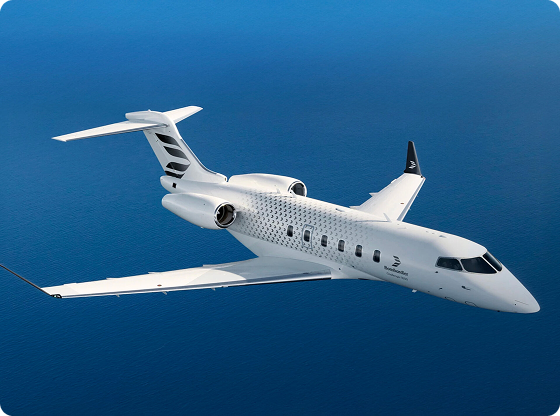
Defining the Categories
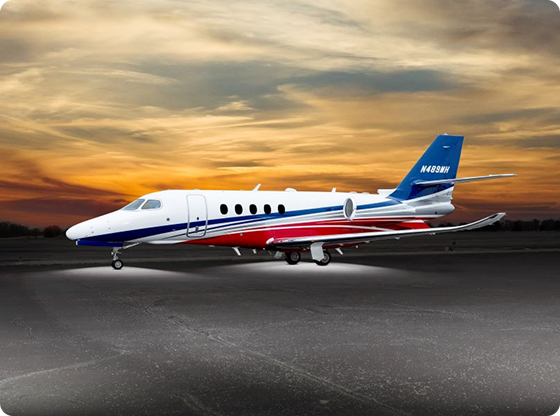
Light jets accommodate four to eight passengers with a range of 1,000 to 2,500 nautical miles. The compact cabin — galley, lavatory, and pressurized environment — has limited stand-up headroom. Midsize jets extend capacity to seven to nine passengers and range to 3,000 nautical miles, with near stand-up headroom. That cabin height distinction determines whether an aircraft functions as a working environment or primarily as a transit vehicle.
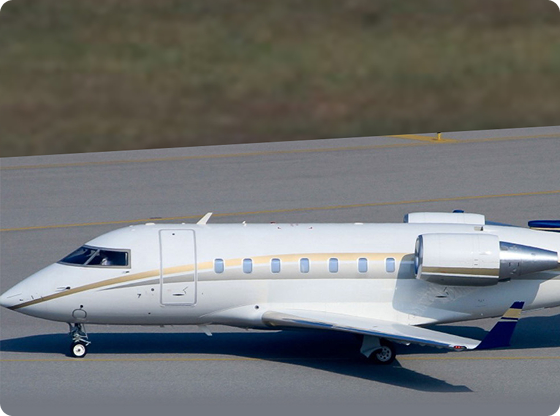
Cabin Dimensions and Passenger Capacity
Cabin dimensions shape the passenger experience more as leg duration increases. Light jet cabins offer approximately 4.5 feet of headroom — seated comfort is standard, but movement is limited. Midsize jet cabins approach 5.7 feet, allowing passengers to stand and move freely — a meaningful difference on legs beyond two hours. Midsize jets also provide enclosed lavatories and larger baggage compartments as standard, practical advantages on longer sectors.
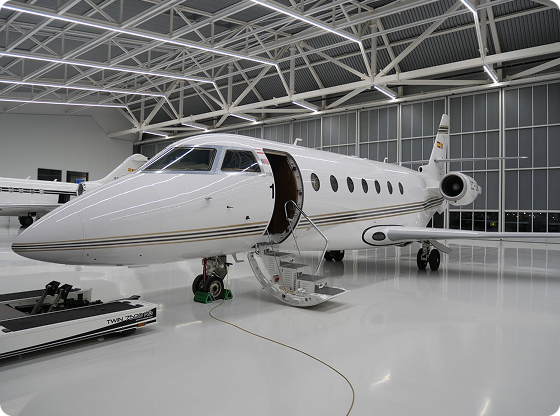
Light Jet Range and Typical Routing
Light jets cover 1,000 to 2,500 nautical miles, handling most Canadian domestic inter-city routes without a fuel stop. Short-field performance extends utility to smaller regional airports — an advantage beyond the major hub network. Midsize jets reach 3,000 nautical miles, covering transcontinental North American routes. The mission crossover zone — approximately 1,500 to 2,000 nautical miles with five or more passengers — is where both categories genuinely compete.
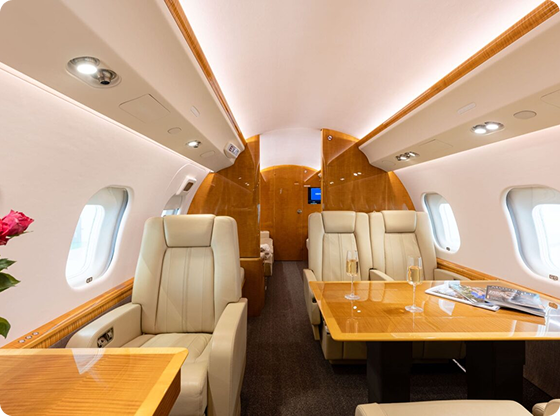
Operating Considerations for Canadian Missions
Most Canadian inter-city routes — Montréal, Toronto, Calgary, Vancouver, Edmonton, and Ottawa — fall within the light jet’s range without a fuel stop, well-suited to small executive teams. Short-field performance extends access to regional airports where commercial service is limited. A midsize jet becomes appropriate when team size exceeds six passengers, routes push beyond the domestic hub network, or an evolving mission profile includes international routing.
How ACASS Approaches the Category Decision
The category decision intersects with whether ownership or charter is the right access model, and the operator’s long-term goals — not just the next trip. ACASS approaches this as a consultant, not a broker, with 30+ years of experience and $2B+ in transactions across 56 countries. IS-BAO Stage 3 (2017), ARGUS Gold (since 2013), and IADA Accredited Dealer status (since 2019) define the standard. ACASS holds Air Operator Certificates in Canada, Ireland, and San Marino.
Light Jet or Midsize Jet: Mission Fit
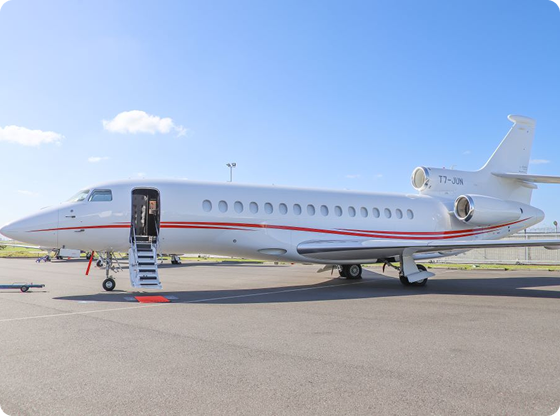
Three questions determine fit: how many passengers, how far the routes, and how long the legs. The light jet suits four to six passengers on domestic or regional routes under three hours. The midsize jet fits when counts reach seven or more, legs exceed three hours, or transcontinental routing is part of the regular mission. When missions push beyond midsize range, the super midsize jet category warrants evaluation.
Frequently Asked Questions
-
The primary difference between a light jet and a midsize jet is cabin size and stand-up headroom. Midsize jets offer near or full stand-up capability — typically approaching 5.7 feet — which materially changes the passenger experience on legs of two hours or more. Light jets have approximately 4.5 feet of headroom; seated comfort is standard, but movement through the cabin is limited. Secondary differences include range, passenger capacity, and baggage volume. Both are capable business aircraft — the distinction is mission fit, not quality.
-
Midsize jets typically achieve approximately 2,000 to 3,000 nautical miles depending on model, configuration, and load — a midsize jet range that covers most transcontinental North American routes and many shorter international legs without a fuel stop. This positions the category above the light jet and below the super midsize and heavy jet categories in terms of non-stop reach. Range figures are model-specific; actual non-stop capability for any specific mission should be confirmed with an operator against the aircraft type, payload, and routing.
-
On shorter routes with smaller groups, a light jet charter delivers equivalent comfort and professional travel quality for the mission duration. For a team of four on a two-hour domestic sector, the light jet provides the same schedule control, airport flexibility, and cabin environment as a midsize jet with no meaningful operational difference. On longer routes or with larger groups, the light jet’s range and cabin limitations become relevant — a fuel stop or reduced passenger load may be required. ACASS operates both categories as a direct charter operator under its own AOC — not a broker arranging third-party aircraft.
-
Super midsize jets bridge the gap between midsize and heavy jet categories: a larger cabin, extended range typically beyond 3,000 nautical miles, and greater passenger comfort on long legs. The key upgrade over the midsize jet is non-stop transcontinental range on most models and a more refined cabin for extended operations. The super midsize is appropriate for operators whose missions regularly push beyond midsize range, whose passenger loads have grown, or whose route profile has evolved to include international sectors.
-
Midsize jet charter provides access to the category without ownership obligations — appropriate for operators whose flight activity does not justify full ownership or whose mission profile varies across trips. Ownership provides consistent availability, operational control, and the option to offset fixed obligations through managed charter revenue when the aircraft is not in use. The decision is driven by utilisation patterns, mission consistency, and the preferred operational arrangement. Connect with an ACASS consultant to evaluate the right access model.
-
Connect With a Specialist at ACASS — a direct AOC operator and IADA Accredited Dealer with 30+ years of experience across 56 countries. Own Your Journey®
