
Our
Locations
-
World HQ

6700 Côte de Liesse, suite 206,
+1 514 636-1099
Montréal, Canada,
H4T 2B5 -
Ireland

Suite 3230, Building 3000, Westpark Business Campus, Shannon, Clare, V14 AN29
+353 61 475 802 -
San Marino

World Trade Center, Via Consiglio dei Sessanta,
+39 0549 942-551
99, 47891 Dogana, San Marino


Global 7500 vs. G700: Ultra Long Range Comparison
Selecting between the two leading ultra long range aircraft on the market comes down to operational precision, not brand preference. The Bombardier Global 7500 and Gulfstream G700 each define the category on their own terms—and the right choice depends on routing, cabin requirements, crew profile, and long-term management infrastructure. ACASS brings a consultative perspective as an IADA Accredited Dealer with 30+ years in business aviation, $2B+ in transactions, and presence across 56 countries. Own Your Journey®.
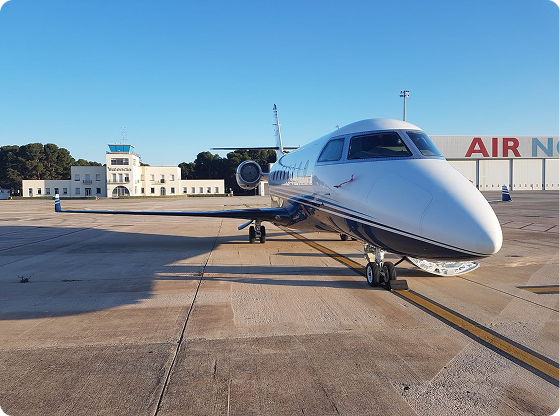
Bombardier Global 7500 Performance
Built at Bombardier’s Mirabel facility, the Global 7500 pairs a long, clean wing with two GE Passport 20 engines engineered for the platform. Range reaches 7,700 nm under NBAA IFR reserves with eight passengers—connecting London to Singapore non-stop. Maximum operating speed is Mach 0.925. Runway performance is a practical differentiator: the Global 7500 requires approximately 5,800 ft of takeoff field, expanding the available airport network.
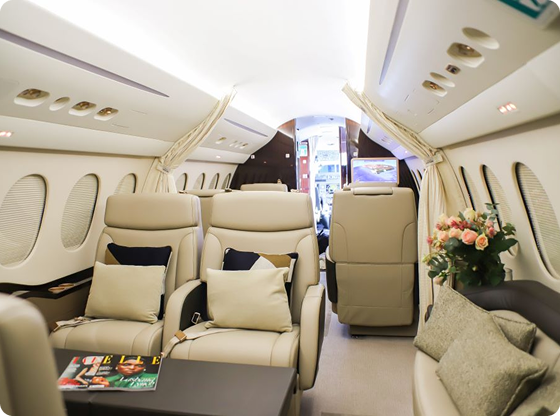
Global 7500 Cabin and Flight Deck
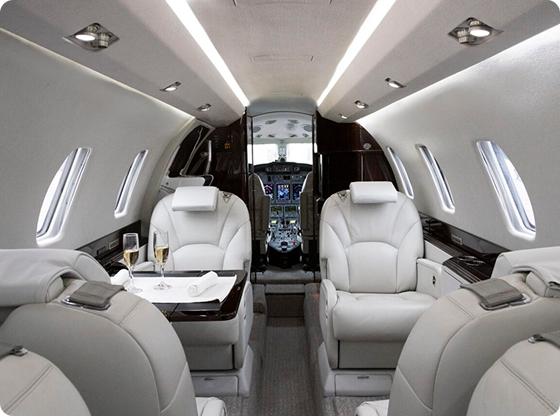
The cabin is organized around four dedicated living zones with the proprietary Nuage seat—engineered specifically for long-duration missions with full recline and an articulating ottoman. The Bombardier Vision Flight Deck integrates Synthetic Vision, Enhanced Vision, and a fully integrated autothrottle. The Pur Air cabin air system delivers one of the lowest confirmed cabin altitudes in the class, reducing passenger fatigue on the longest segments.
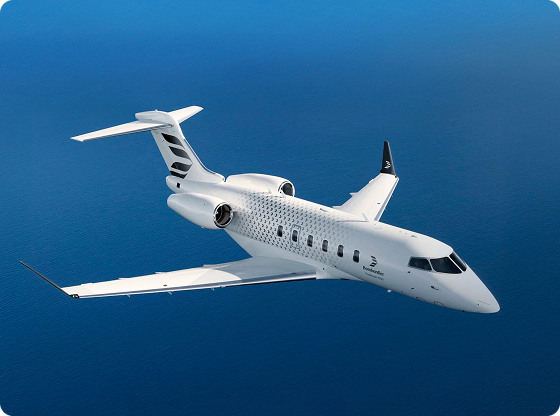
Global 7500 Confirmed Specifications
Range: 7,700 nm (NBAA IFR, 8 pax) • Max speed: Mach 0.925 • Cabin length: 54 ft 5 in • Cabin width: 8 ft 0 in • Cabin height: 6 ft 2 in • Cabin zones: 4 • Passenger capacity: up to 19 • Baggage volume: 195 cu ft • Engines: two GE Passport 20-19BB1A • Takeoff field: approx. 5,800 ft

Gulfstream G700 Performance
The G700 was developed on an extended platform derived from the G650 lineage, incorporating a new fuselage cross-section, winglet upgrades, and updated systems. Manufacturer-published range is 7,500 nm under NBAA IFR reserves. Maximum operating speed is Mach 0.935, among the highest confirmed figures in the category. Propulsion comes from two Rolls-Royce Pearl 700 engines. The FAA type certificate was issued in September 2023, with first customer delivery to Qatar Executive completing later that year.

G700 Cabin and Flight Deck
The G700 cabin is the longest and widest in the ultra long range category, supporting up to five living zones. Twenty cabin windows deliver natural light across the full length. Cabin altitude is confirmed at 4,850 ft—among the lowest in business aviation. The Symmetry Flight Deck introduces electronically linked active control sidesticks and high-resolution touchscreen avionics. Gulfstream’s circadian lighting system and 100 percent fresh air environment are standard.
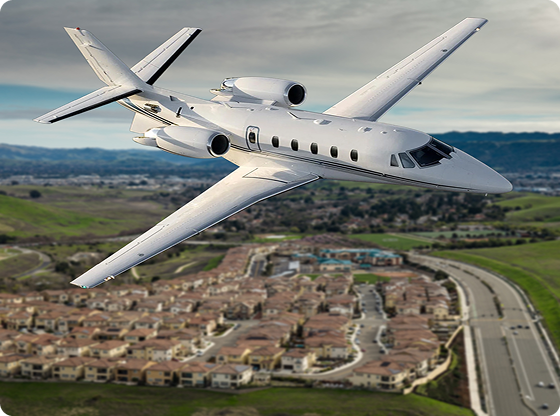
G700 Confirmed Specifications
Range: 7,500 nm (NBAA IFR, 8 pax) • Max speed: Mach 0.935 • Cabin length: 56 ft 11 in • Cabin width: 8 ft 2 in • Cabin height: 6 ft 3 in • Cabin zones: up to 5 • Passenger capacity: up to 19 • Baggage volume: 195 cu ft • Engines: two Rolls-Royce Pearl 700 • Takeoff field: approx. 6,250 ft
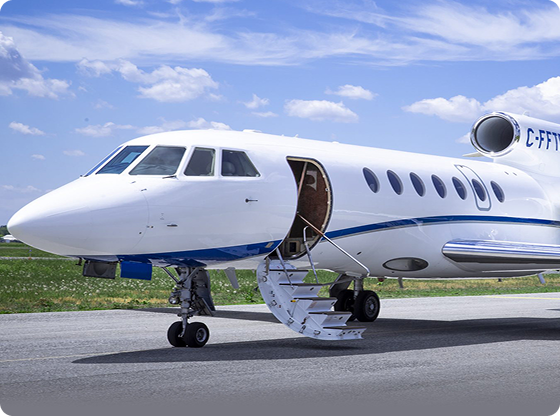
Global 7500 vs. G700: Side-by-Side Comparison
Three differentiators drive most evaluations. Range: the Global 7500 holds approximately 200 nm advantage—operationally negligible on most routes, relevant only on ultra long haul city pairs at the outer edge of both aircraft’s capability. Cabin length: the G700’s 56 ft 11 in provides added configuration flexibility. Takeoff field: the Global 7500’s approximately 480 ft shorter requirement widens the available airport network for operators accessing airports with shorter available runway lengths.

Range and Routing: Which Aircraft Fits Your Network?
For operations that consistently require more than 7,500 nm non-stop, the Global 7500’s range margin is meaningful. For operators whose longest routes fall inside 7,500 nm, range is not a differentiating factor. Operators serving airports with shorter runway infrastructure gain a practical benefit from the Global 7500’s reduced field requirement. Routing analysis against your actual city pairs is the correct starting point—not a headline specification.
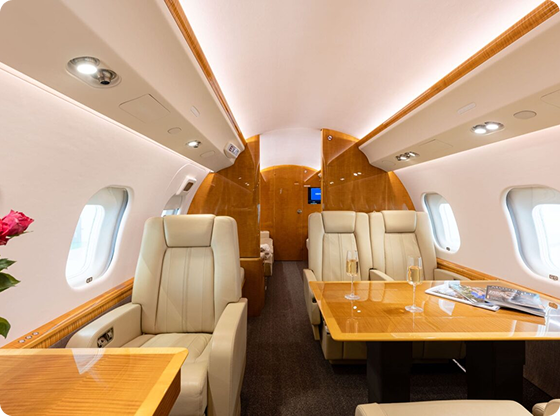
Cabin Configuration and Passenger Profile
The four-zone vs. up to five-zone distinction matters when the manifest requires simultaneous separation of work, dining, sleep, and crew rest. The G700’s longer cabin provides more flexibility for custom interior layouts. The Global 7500’s Nuage seat is a confirmed differentiator on 14-hour-plus missions, where ergonomics compound in importance over the flight’s duration. Both aircraft accommodate up to 19 passengers in executive configuration.
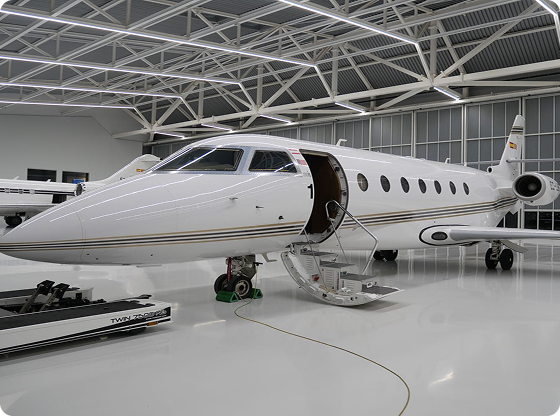
Crew Profile and Flight Deck Considerations
Both platforms require type-rated crews. The G700’s Symmetry Flight Deck introduces active control sidesticks—a meaningful ergonomic change for pilots familiar with column-equipped aircraft. Chief pilot input on flight deck familiarity is a legitimate factor in the final decision. Hangar and FBO access is also worth evaluating: in markets with limited infrastructure, the Global 7500’s shorter fuselage simplifies positioning. ACASS has operational presence across 56 countries.
Acquisition and Charter with ACASS
ACASS is an IADA Accredited Dealer—a credential reflecting demonstrated transaction integrity and professional conduct specific to aircraft sales. With $2B+ in aircraft transactions executed across 56 countries, ACASS has deep experience in ultra long range acquisitions across multiple jurisdictions and complex ownership structures. Advisory is delivered as a consultant representing the buyer’s or seller’s interests—not as a transactional broker. Both the Global 7500 and G700 are available for charter through ACASS operations.

Aircraft Management Under a Verified Safety Framework
Both aircraft can be managed within ACASS’s independently verified safety framework. ACASS holds IS-BAO Stage 3, awarded in 2017, and ARGUS Gold, held since 2013. Management services encompass regulatory compliance, crew management, maintenance oversight, and safety management systems—delivered end to end. For principals evaluating acquisition alongside management, the operational infrastructure is already in place. Connect With a Specialist to discuss acquisition, charter, or management of a Global 7500 or G700.
Conclusion
The Bombardier Global 7500 and Gulfstream G700 define the current standard in ultra long range business aviation. The right aircraft for your operation depends on routing, cabin configuration, crew profile, and management infrastructure—not a single specification margin. ACASS works with operators and principals through every stage of that evaluation, from initial mission analysis to acquisition completion or charter arrangement. Explore the ultra long range jet guide for a broader view of the category. Own Your Journey®.
Frequently Asked Questions
-
Manufacturer-published figures place the Global 7500 at 7,700 nm and the G700 at 7,500 nm under NBAA IFR reserve conditions—a differential of approximately 200 nm. In real-world operations, both aircraft cover the world’s longest business aviation routes without a fuel stop. The range differential becomes operationally relevant only on a narrow set of ultra long haul city pairs at the outer edge of both aircraft’s published capability.
-
Neither aircraft is categorically superior. Mission suitability depends on routing, airport infrastructure, cabin configuration, and crew profile. The Global 7500 holds a marginal range advantage and a shorter runway requirement. The G700 offers a longer cabin, up to five living zones, and a confirmed cabin altitude of 4,850 ft. The decision belongs to the operator’s specific requirements. Connect With a Specialist for a mission-matched evaluation.
-
The G700 cabin is longer at 56 ft 11 in vs. 54 ft 5 in on the Global 7500, marginally wider at 8 ft 2 in, and supports up to five living zones. The Global 7500 is configured with four dedicated zones and features the proprietary Nuage seat, engineered for long-duration missions. Both aircraft accommodate up to 19 passengers in executive configuration and offer 195 cu ft of baggage volume.
-
Yes. ACASS provides aircraft management services for both the Bombardier Global 7500 and the Gulfstream G700. ACASS holds IS-BAO Stage 3 certification, awarded in 2017, and ARGUS Gold, held since 2013. Management services encompass regulatory compliance, crew management, maintenance oversight, and safety management systems—delivered within a framework designed for the operational complexity of ultra long range aircraft. Connect With a Specialist to discuss management terms for either aircraft.
-
The Global 7500 uses the Bombardier Vision Flight Deck, based on Garmin G5000, with Synthetic Vision, Enhanced Vision, and a fully integrated autothrottle. The G700 uses the Gulfstream Symmetry Flight Deck with electronically linked active control sidesticks, high-resolution touchscreen displays, and the Predictive Landing Performance System. The active sidestick configuration is a meaningful ergonomic distinction for pilots transitioning from column-equipped aircraft. Both platforms represent current-generation avionics optimized for long-haul operations.
-
Yes. ACASS is an IADA Accredited Dealer with $2B+ in aircraft transactions across 56 countries. Acquisition advisory is delivered as a consultant representing the buyer’s or seller’s interests—not as a transactional broker. Both the Bombardier Global 7500 and Gulfstream G700 are available for charter through ACASS operations, with availability confirmed on a trip-specific basis. Connect With a Specialist to discuss acquisition, charter, or management options.
Own Your Journey®.
