
Our
Locations
-
World HQ

6700 Côte de Liesse, suite 206,
+1 514 636-1099
Montréal, Canada,
H4T 2B5 -
Ireland

Suite 3230, Building 3000, Westpark Business Campus, Shannon, Clare, V14 AN29
+353 61 475 802 -
San Marino

World Trade Center, Via Consiglio dei Sessanta,
+39 0549 942-551
99, 47891 Dogana, San Marino


Business Jet Charter to Remote Canadian Destinations: Access, Aircraft, and Planning
Canada’s geography shapes every remote business aviation decision. For resource sector executives, corporate travel managers, and fly-in operators, commercial networks simply do not reach the destinations that matter. Business jet charter to remote Canadian destinations is a specialist discipline—one that demands direct AOC authority, confirmed aircraft-to-strip matching, and contingency planning built into every leg before departure.

Why Remote Charter Requires a Specialist Operator
Commercial aviation serves a narrow network of major Canadian airports. Charter aircraft operating under a Transport Canada AOC can reach hundreds of registered aerodromes across the country—but not every operator has the aircraft, crew certification, or dispatch infrastructure to execute remote missions reliably. When air is the only route in, operator capability becomes the primary qualification criterion, not a secondary consideration.

Direct AOC Operators vs. Non-Operating Advisors
A Transport Canada AOC authorises its holder to conduct commercial air operations—dispatch release, crew assignment, fuel planning, and regulatory accountability. A non-operating advisor arranges access to another operator’s aircraft without holding this authority. For remote missions, that distinction is operational, not administrative. Only the direct AOC holder can make and execute real-time decisions when weather moves, a strip becomes unusable, or a crew duty limit approaches.
ACASS as a Direct AOC Operator
ACASS holds a Canadian AOC issued in 2004 and manages all remote charter planning elements directly. Fuel uplift logistics, alternate airport filing, crew assignment with confirmed type ratings, and dispatch release are executed within ACASS’s own operational command—not sub-contracted to an intermediary. With IS-BAO Stage 3 certification awarded in 2017 and ARGUS Gold held since 2013, every remote mission operates under the same safety framework as any other ACASS flight.

Aircraft Selection for Remote and Gravel Strip Operations
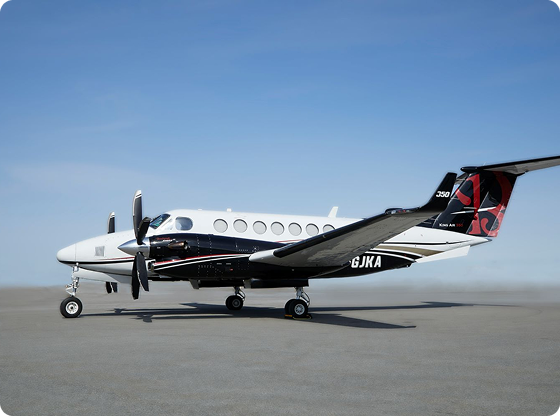
Not every aircraft cleared for paved runways is certified for unpaved or contaminated surfaces. Turboprops, including the King Air 350 and Pilatus PC-12, carry confirmed short-field and gravel-strip capability suited to resource sector strips, fly-in lodge access, and northern community aerodromes. Light jets require paved or improved surfaces of sufficient length. Midsize and large-cabin jets are appropriate where remote aerodromes have adequate paved runway. Strip specifications, not category preference, determine aircraft selection.
Cabin Configuration for Multi-Day Remote Missions
On extended remote deployments, the aircraft often serves as the crew’s rest facility between legs. Cabin configuration becomes a planning factor rather than a comfort preference. Baggage capacity for field equipment, galley provisions for unserviced destinations, and crew rest availability all require confirmation before departure. Aircraft selection for multi-day remote itineraries must account for configuration, not only range and strip certification.

Winter and Cold-Weather Operations Planning
Transport Canada winter operations requirements mandate specific aircraft certification, de-icing capability, and crew training standards. De-icing infrastructure is present at major Canadian airports and absent at most remote aerodromes. Aircraft conducting winter operations to unserviced destinations must have de-icing capability arranged as part of mission planning. Crew duty limits, alternate airport windows, and fuel uplift for cold-weather legs must all be confirmed at the dispatch level before departure.

Fuel Logistics at Unserviced Aerodromes
Fuel availability cannot be assumed at remote Canadian aerodromes. Every leg of a multi-stop remote itinerary requires independent fuel logistics confirmation before dispatch. Pre-arrangement for fuel uplift at unserviced strips is managed by the direct AOC holder, not inferred by a non-operating advisor. For Arctic and northern routes, fuel planning must account for weather diversions and alternate legs that may extend well beyond the filed routing.

Resource Sector Charter: Oil Sands and Mining Operations
Alberta and BC resource sector operations generate the highest consistent remote charter demand in Canada. Flights to oil sands sites and operational strips across northern Alberta operate year-round, serving Fort McMurray and crew-change circuits at mine sites. Canadian mining operations across the Shield, Northern Ontario, the Yukon, and the Northwest Territories add executive and workforce charter activity—many on strips accessible only by air, where turboprop certification is the standard.

Fly-In Lodge and Wilderness Access
Seasonal remote demand is anchored by fly-in lodge access across British Columbia, Quebec, and the Northwest Territories. Great Bear Lake, the Haida Gwaii region, interior BC, and Quebec’s wilderness lodges drive summer and fall charter activity for fishing, hunting, and executive retreat destinations that no road reaches. Destination seasons and strip conditions vary significantly, and aircraft selection must be confirmed against current aerodrome specifications before booking.
Cottage Country and Seasonal Property Access
Shorter-range remote charter serves high-net-worth individuals accessing seasonal properties in Muskoka, Charlevoix, and BC’s interior. Light aircraft and turboprops operate into regional strips and water aerodrome areas, providing direct access to properties beyond the reach of commercial service. Seasonal strip conditions and weight restrictions require confirmation for each departure period. ACASS plans these itineraries under the same dispatch framework applied to longer northern missions.

What to Ask Any Remote Charter Operator
The operational question for any remote Canadian charter is not what aircraft is available—it is whether the operator holds the AOC authority to execute the mission and the dispatch infrastructure to manage it when conditions change.
Confirm the operator’s AOC status, their direct involvement in fuel and crew planning, and their strip-certification process for each specific destination. Category availability is not a substitute for confirmed operational authority.

How ACASS Plans Your Remote Mission
ACASS’s planning process covers aircraft-to-strip matching against confirmed runway specifications, fuel uplift logistics, crew assignment with cold-weather type ratings, dispatch release under the Canadian AOC, alternate airport filing, and ground handling confirmation where available. With 30+ years of business aviation experience across 56 countries and direct AOC authority since 2004, ACASS manages every planning element internally. Connect With a Specialist to discuss your remote Canadian charter requirements.
Conclusion
Remote Canadian charter is a capability question before it is an availability question. The aircraft must be certified for the strip, the operator must hold direct AOC authority, and every contingency—fuel, alternates, crew rest, and seasonal conditions—must be confirmed before departure. ACASS operates as a direct AOC holder under IS-BAO Stage 3 and ARGUS Gold standards, with remote and northern charter experience built over three decades of business aviation.
Connect With a Specialist to plan your remote Canadian charter. Own Your Journey®.
Frequently Asked Questions
-
Remote destinations involve unpaved, short, or unserviced strips where not all aircraft are certified to operate. There is no FBO infrastructure for crew rest, de-icing, or fuel, and no commercial alternate if the charter is delayed. Fuel uplift, strip capability, alternate airports, and crew duty must all be confirmed in advance by a direct AOC holder. Operator capability matters as much as aircraft capability—and sometimes more.
-
Turboprops, including the King Air 350 and Pilatus PC-12, are the most commonly used aircraft for gravel and unpaved strip operations in Canada. Their short-field performance and airframe certifications make them appropriate for remote aerodrome access. Light jets require paved or improved surfaces. Certification varies by model, configuration, and serial number—confirm specific strip specifications and aircraft certification with the operator before any remote booking is finalized.
-
ACASS manages fuel uplift, crew positioning, and ground handling logistics directly as part of its planning process for unserviced destinations. Alternate airport filing and contingency routing are handled through its licensed dispatch function under the Canadian AOC. Crew duty and rest requirements are planned to regulatory standards before departure. The organisation making pre-departure planning decisions is the same organisation operating the flight and accountable for the mission.
-
Yes. A single itinerary can include multiple remote stops, subject to aircraft range, crew duty limits, and strip compatibility at each destination. Each strip must be independently assessed for runway length, surface type, and seasonal condition. Fuel and crew logistics must be confirmed for the full sequence of legs before dispatch. ACASS plans multi-destination remote itineraries as a standard capability, including resource sector circuits combining multiple oil sands or mining strips.
-
Winter drives ski lodge and mountain resort access from late November through April. Resource sector and mining destinations operate year-round on shift cycles independent of leisure calendars. Summer and fall are primary drivers for fly-in lodge access across fishing, hunting, and wilderness retreat destinations, many accessible only by charter within defined seasons. Oil sands and mining charter runs continuously with no dominant seasonal peak, carrying workforce and executive travel on cycle-based schedules.
-
ACASS holds a Canadian AOC and has conducted charter operations across remote, northern, and international routes since 2004. Arctic and far-northern missions require specific planning for fuel availability at unserviced strips, extended alternate airport diversions, cold-weather crew certification, and rapid weather-window management at dispatch level. These planning elements are managed within ACASS’s own operational command. Connect With a Specialist to discuss specific Arctic or northern routing requirements.
