
Our
Locations
-
World HQ

6700 Côte de Liesse, suite 206,
+1 514 636-1099
Montréal, Canada,
H4T 2B5 -
Ireland

Suite 3230, Building 3000, Westpark Business Campus, Shannon, Clare, V14 AN29
+353 61 475 802 -
San Marino

World Trade Center, Via Consiglio dei Sessanta,
+39 0549 942-551
99, 47891 Dogana, San Marino


Jet vs. Turboprop Aircraft
The jet vs. turboprop aircraft decision is not a performance ranking. It is an operational-profile question, and the right answer is different for every operator. Range, runway access, passenger count, crewing model, and operational geography all shape the choice. ACASS has guided aircraft operators through this evaluation across 56 countries for 30+ years. What follows is the advisory framework we apply to every acquisition conversation.
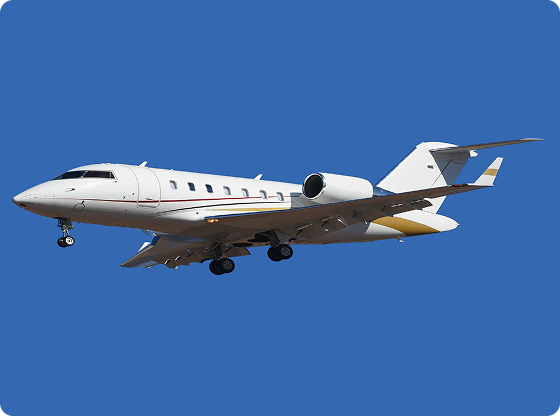
What Is a Turboprop Aircraft?
A turboprop uses a gas turbine engine to drive a propeller, generating thrust through the propeller rather than directly through exhaust. This distinguishes it from piston aircraft, which use combustion to drive cylinders, and from jets, which generate thrust primarily through exhaust. Turboprops burn Jet-A fuel and are recognized for reliability at lower altitudes and shorter sectors. The Pilatus PC-12 and Beechcraft King Air 350 are benchmark examples in business aviation, each combining pressurized cabins with the operational flexibility that turboprop propulsion enables.

Speed and Altitude Compared
Business jets typically cruise in the 400 to 500-plus knot range; turboprops generally operate between 260 and 330 knots. Jets perform most efficiently at FL350 to FL450, above most weather systems and congested airspace. Turboprops are optimized below FL300, often operating at FL200 to FL250. On very short sectors under 400 nautical miles, the speed gap narrows considerably once climb and descent profiles are accounted for. Neither aircraft type is universally superior. The flight range determines which performance envelope actually matters.

Runway Access and Airport Reach
Turboprops require significantly shorter runway lengths than business jets and are capable of short takeoff and landing operations that open access to remote, coastal, island, and underdeveloped airports that jets cannot serve. Business jets require longer, prepared runways and are generally restricted to major and mid-size airports with full infrastructure. For operators flying into mountain, coastal, or remote regions, turboprop runway access is often the decisive operational variable. The Pilatus PC-12 is the recognized benchmark for short-field performance in business aviation.
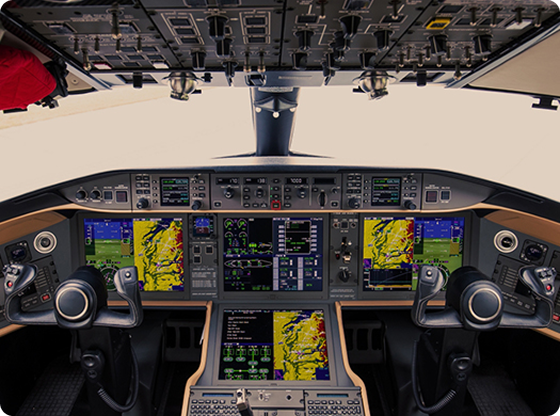
Cabin, Payload, and Passenger Count
Business jets generally offer larger, more configurable cabins with greater passenger capacity than turboprops. Modern turboprops such as the Beechcraft King Air 350 carry up to nine passengers in a pressurized, air-conditioned cabin, adequate for most regional business flights. Turboprops often balance passenger load and cargo more fluidly than jets within the same operation. For operators flying groups of six or fewer on sectors under 600 nautical miles, turboprop cabin capacity is rarely a limiting factor. Larger groups or intercontinental requirements shift the calculus toward business jets.
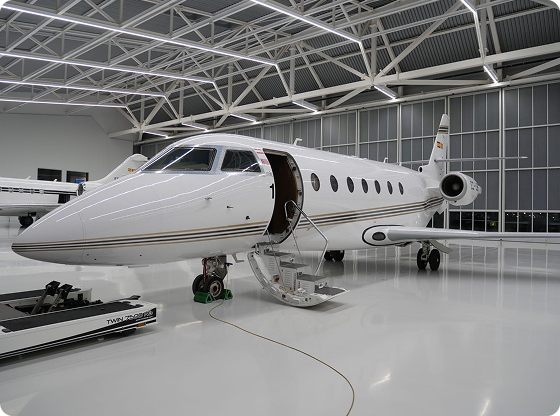
When a Turboprop Is the Right Choice
Turboprops consistently outperform business jets on short sectors, typically under 500 to 600 nautical miles, where the jet’s speed advantage shrinks relative to the full block time including climb and descent. They are the operationally appropriate choice for destinations requiring short or unprepared runway access, for lower annual utilization profiles where operational simplicity is a documented advantage, and for owner-flown operations where single-pilot certification is an advantage. Regional and remote markets in Africa, the Caribbean, and Southeast Asia, where infrastructure is limited, strongly favor turboprop operations.

When a Business Jet Outperforms
Business jets are the appropriate choice for transcontinental and intercontinental sectors where block time is a measurable productivity variable and the speed advantage is fully realized. Flights requiring consistent high-altitude performance above weather, passenger counts that exceed turboprop cabin capacity, and international routing through major hub airports where jet infrastructure is standard all point toward business jets. Time-sensitive executive travel, where schedule demands have direct operational value, is the core use case where jet propulsion delivers an outcome that turboprop performance structurally cannot match.

Evaluating the Operational Picture
The variables that shape the operational picture differ significantly between turboprops and business jets. Fuel consumption, maintenance requirements, crewing model, and management structure each contribute to total operational requirements in ways that vary by aircraft type, age, and utilization profile. The PT6 engine family powering most business turboprops is widely noted for reliability and maintainability. A meaningful evaluation requires assessing your specific operational profile across all relevant factors. ACASS provides this analysis through its consultative aircraft acquisition advisory process.

How ACASS Guides the Decision
As an IADA Accredited Dealer since 2019, IS-BAO Stage 3-certified, and AOC holder in Canada, Ireland, and San Marino, ACASS brings verified operational and transaction credentials to every aircraft evaluation. With 30+ years of guidance across 56 countries and $2B+ in completed transactions, ACASS’s depth of experience spans the full spectrum of business aviation. The turboprop vs. business jet question is answered differently for every operator. ACASS’s consultative model starts with the operator’s actual operational profile, not the aircraft category. Own Your Journey®.

Turboprop vs. Business Jet Safety
Both turboprop and business jet aircraft certified under modern airworthiness standards are considered safe platforms. The PT6 engine family powering most business turboprops carries one of the strongest reliability records in general aviation. Safety outcomes are more closely tied to operator standards, maintenance programs, and crew qualifications than to aircraft type. IS-BAO, the International Standard for Business Aircraft Operations, is the recognized framework for operational safety in business aviation. ACASS holds IS-BAO Stage 3, the highest certification level, reflecting its commitment to safety across every aircraft category it operates.

The Role of Crewing and Certification
Many turboprops are certificated for single-pilot operations, a documented advantage for owner-operators and smaller flight departments where scheduling flexibility and operational simplicity matter. Business jets above certain weight categories require two-crew operations and specific type ratings. For owner-operators and smaller flight departments, the crewing model affects scheduling, recruitment, and operational overhead in ways that can be as consequential as the aircraft’s performance envelope. Aircraft type selection has direct implications for crew training and qualification, factors ACASS addresses through its Flight Crew Staffing service.

Turboprops vs. Jets for Charter Operations
Turboprops are increasingly used in on-demand charter for short-sector, high-frequency routes and remote-access routes where business jets cannot operate. As an AOC holder in Canada, Ireland, and San Marino, ACASS operates charter across multiple aircraft categories as a certified operator, not as a broker. The turboprop charter option is often overlooked by clients focused on jet categories, yet it can be the operationally superior choice for the right route. ACASS’s charter specialists can evaluate whether to charter a turboprop aircraft or a business jet for your specific routing requirements.
Your Operational Profile Determines the Answer
The jet vs. turboprop aircraft decision has no universal answer. It is a function of range, runway access, passenger count, crewing model, and operational geography. Short-sector, remote-access, and owner-flown operations often favor turboprops. Transcontinental, time-sensitive, and high-capacity operations favor business jets. Every operator’s requirements are different, and a structured advisory process consistently produces better outcomes than a category default. Connect with a Specialist to evaluate the right aircraft for your operational profile with an ACASS aviation consultant. ACASS — Own Your Journey® Own Your Journey®
Frequently Asked Questions
-
Cost-effectiveness depends entirely on operational profile, not aircraft category alone. The relevant variables include sector length, utilization, crewing model, and management structure — each of which affects the total operational picture in ways that published averages cannot capture. What is favorable on a short sector may not hold on a longer route, and vice versa. ACASS provides personalized operational analysis as part of its aircraft acquisition advisory process. No universal conclusion applies across all operators and routes.
-
Yes. Many turboprops are fully certificated for international operations under ICAO rules. The Pilatus PC-12 has a published range exceeding 1,800 nautical miles, sufficient for transatlantic island sectors and many transcontinental routes. International operations require appropriate airworthiness documentation, crew qualifications, and operational authorization from the relevant aviation authorities. ACASS holds AOCs in Canada, Ireland, and San Marino, enabling cross-jurisdiction operations across multiple aircraft categories. Aircraft registration and operator certification affect international routing more than aircraft type alone.
-
The Pilatus PC-12 offers a published range exceeding 1,800 nautical miles, making it viable for intercontinental island sectors and regional operations requiring both range and short-field capability. It cruises at competitive speeds for a single-engine turboprop, slower than a light jet but substantially faster than piston aircraft. The PC-12 is capable of operating from short, unpaved airstrips inaccessible to most business jets. It combines a pressurized cabin, high useful load, and single-pilot certification in one of the most versatile business turboprops available.
-
The Beechcraft King Air 350 is one of the most widely operated turboprops in business aviation charter globally. Its twin-engine configuration, pressurized cabin, and passenger capacity suited to typical business group travel make it a practical choice for short- to medium-range charter sectors. Its ability to access shorter runways expands the range of destinations available beyond what most business jets can serve. ACASS’s charter team can evaluate whether the King Air 350 or a jet category suits your specific routing requirements.
-
Both turboprop and jet engines use a gas turbine core. The fundamental difference is in how thrust is generated. A turboprop extracts most of the turbine energy to drive a propeller; a jet engine generates thrust primarily from exhaust. Turboprops are most efficient at lower speeds and altitudes; jet engines reach peak efficiency at higher speeds and flight levels. The PT6 engine family powering most business turboprops is recognized for reliability and ease of maintenance. Aircraft type selection should follow operational requirements, not engine preference.
-
Yes. Turboprop and jet aircraft each require specific type ratings, and requirements differ by aircraft model and certification category. Single-engine turboprops such as the Pilatus PC-12 may be flown by a single certificated pilot; most business jets above a certain weight require two-crew operations with crew-specific type ratings. Type rating requirements affect crew recruitment, scheduling, and training investment. ACASS’s Flight Crew Staffing service supports operators navigating crew qualification across turboprop and jet categories. Crewing strategy should be evaluated alongside aircraft selection.
