Our
Locations
World HQ

6700 Côte de Liesse, suite 206,
+1 514 636-1099
Montréal, Canada,
H4T 2B5Ireland

Suite 3230, Building 3000, Westpark Business Campus, Shannon, Clare, V14 AN29
+353 61 475 802San Marino

World Trade Center, Via Consiglio dei Sessanta,
+39 0549 942-551
99, 47891 Dogana, San Marino

Charter a Private Jet or Own a Super Midsize? A Financial Analysis

Whether you are flying 200 hours a year and beginning to question whether it is time to buy, or deciding to charter a private jet for another season while you evaluate the full picture, the ownership-versus-charter decision in the super midsize category is rarely straightforward. The variables are numerous, the stakes are significant, and most published guides approach the question at the level of a generic business aircraft rather than the specific platform you are actually considering.
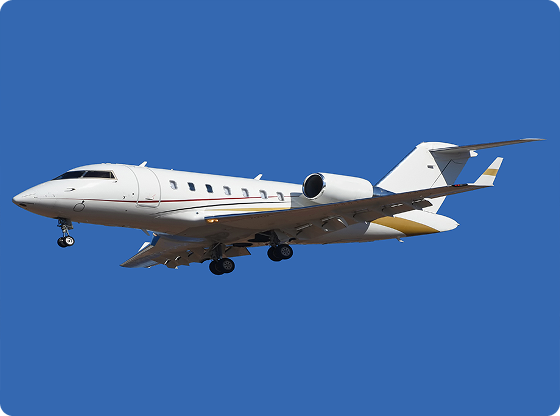
This analysis focuses on the super midsize category — Bombardier Challenger 350, Cessna Citation Latitude, and Embraer Praetor 500. Ownership economics, charter dynamics, and management structures differ meaningfully across aircraft classes, and modeling the decision on the wrong category produces the wrong answer.
Here you will find category-specific guidance on cost structure, breakeven logic, the role of tax treatment, fractional ownership economics, and the charter revenue offset model that most ownership guides leave out entirely. If you have been looking for a structured framework for evaluating business jet ownership in this segment, Own Your Journey® begins with the right analysis.
What Does It Actually Cost to Own a Super Midsize Jet?
Understanding the true cost of private jet ownership in the super midsize category requires separating three distinct layers: acquisition, annual fixed costs, and variable costs per flight hour. Treating them as a single blended figure is how buyers consistently underestimate total ownership cost — and how breakeven projections end up optimistic.
Acquisition and Financing
Acquisition cost in the super midsize segment varies considerably based on model year, airframe hours, avionics currency, and interior condition. New aircraft and pre-owned examples from recent vintage years carry meaningfully different capital requirements, and the spread between entry-level and top-of-market examples within the same model line is significant.
Aircraft financing structures typically involve a loan-to-value arrangement with multi-year terms. Debt service represents a fixed monthly obligation that begins before a single operational dollar is spent, and the financing structure chosen has a compounding effect on total ownership economics over the aircraft’s life.
Off-market acquisition access and experienced transaction negotiation have an outsized effect on total cost of ownership. Buyers who overpay at acquisition absorb a premium that operational savings rarely recover over a typical ownership cycle.
Annual Fixed Costs
Fixed costs represent what you pay regardless of whether the aircraft flies. For a super midsize jet, the fixed cost stack includes crew compensation, insurance, hangar, recurrent training for each pilot, and management fees, subscriptions, and software.
Base location materially affects this number. Aircraft operating from high-cost metropolitan markets face higher hangar costs and pilot compensation benchmarks than those in secondary markets — a factor that buyers evaluating multiple base options should model explicitly before acquisition.
Variable Costs Per Flight Hour
Variable costs scale directly with utilization. Fuel is the largest driver: the Bombardier Challenger 350 and Cessna Citation Latitude have similar burn profiles, and current Jet-A pricing affects the cost per flight hour materially. Maintenance reserve programs, landing fees, handling, and catering add further variable cost per leg.
The critical insight is that fixed costs must be absorbed across however many hours the aircraft flies annually. At lower utilization, the fixed cost per hour is high. As utilization increases, fixed cost amortizes across more hours, improving the effective cost per flight hour — which is what drives the ownership-versus-charter breakeven analysis.
The Cost to Charter a Private Jet in the Super Midsize Category
For travelers whose mission profile does not justify a dedicated asset, chartering a private jet in the super midsize category carries its own cost structure — one that deserves the same level of rigor as an ownership analysis.
Super midsize charter rates vary based on aircraft type, route, season, and operator. What an occupied hourly rate includes and excludes is equally important: standard inclusions typically cover fuel, crew, insurance, and basic catering, while repositioning legs, de-icing, premium catering, overnight crew expenses, and peak-day surcharges affect the realized cost materially when scaled across a full year.
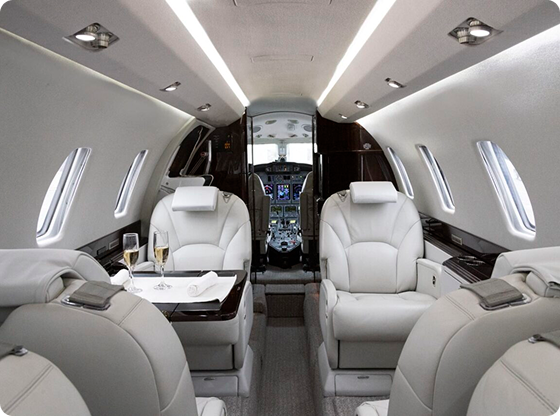
Charter also provides fleet flexibility. A traveler who occasionally needs a light jet for short domestic hops and a large-cabin aircraft for transatlantic routes can access both categories without committing to a single platform. The trade-off: no asset accumulation, no tax depreciation benefit, and no guaranteed availability during peak-demand periods. These trade-offs become more significant as annual utilization rises.
The Breakeven Point: When Does Ownership Make Financial Sense?
The commonly cited rule of thumb is 150–200 hours per year. It appears across nearly every ownership-versus-charter guide published by operators and aviation media. It is also rarely shown with a rigorous methodology — and almost never modeled specifically for the super midsize category, where cost inputs are distinct.
The breakeven calculation compares the total annual cost of ownership against the equivalent annual cost of chartering a private jet at the same utilization level. What most guides omit is the impact of capital cost, depreciation, and charter revenue offset on that comparison. Each variable shifts the threshold — sometimes dramatically.
At lower annual utilization, charter almost always delivers better economics on pure operating cost. Fixed cost absorption at modest flight hours creates an effective hourly cost that charter cannot match. As utilization increases, the cost picture shifts. At higher utilization levels — particularly when a charter revenue offset program is factored in — ownership economics pull ahead of equivalent charter spend with increasing consistency.
The critical variable is how the owner defines cost: operating cost only, or the full economic cost inclusive of capital, depreciation, and opportunity cost. The answer changes which option delivers better economics at any given utilization level.
Tax Benefits and Depreciation: The Ownership Advantage Most Buyers Underestimate
Tax treatment is where the economics of private jet ownership shift most significantly for qualified buyers — and where competitor content offers the least substantive guidance.
When bonus depreciation under Section 168 is available, a qualifying business-use aircraft can be fully expensed in the year of acquisition. The first-year deduction, applied against the buyer’s income profile, can dramatically reduce the effective net acquisition cost — a benefit that charter expenditure, by definition, does not offer.
Aircraft that do not qualify for full bonus depreciation typically depreciate on a MACRS schedule, front-loading deductions in the early years of ownership. The annual depreciation benefit, even under a standard schedule, meaningfully improves the economics of ownership compared to charter, where no depreciation deduction exists.
State sales tax is an additional consideration. Certain states offer registration structures that can eliminate or significantly reduce sales tax exposure on aircraft acquisitions. The savings involved in optimizing the acquisition structure can be material — and are lost if the transaction is not properly structured from the outset.
The critical caveat: personal use limits deductibility. A buyer who uses the aircraft for mixed business and personal travel can only deduct the business-use proportion of the acquisition cost. Maintaining accurate flight logs and business purpose documentation is essential to preserving the deduction.
Tax law changes frequently. ACASS recommends working with an aviation-specialized CPA who can model the specific benefit under current law based on your use profile, transaction structure, and income situation.
Fractional Ownership: The Middle Ground for Super Midsize Jet Access
For the high-frequency traveler who finds full ownership premature, private jet fractional ownership in the super midsize category represents a structured middle path between charter and outright acquisition.
Fractional programs work as follows: the buyer purchases a share — typically ranging from a small fraction to a quarter — in a specific aircraft. That share entitles the owner to a proportional number of annual flight hours. NetJets (Bombardier Challenger 350) and Flexjet (Embraer Praetor 500) are the primary providers in this category. Each program carries a share acquisition cost, an occupied hourly rate, and a monthly management fee — three layers of cost that must be assessed together when comparing fractional economics to charter or outright ownership.
The case for fractional rests on guaranteed availability — typically with advance notice measured in hours rather than days — and relief from full operational responsibility. For buyers who have been chartering and encounter limited availability on peak-demand days, fractional ownership addresses that problem without the capital commitment of outright ownership.
Fractional makes the most financial sense in the mid-range of annual utilization, where charter feels unpredictable and full ownership is premature. For buyers approaching higher annual hours with a consistent mission profile, the economics of full ownership with a charter offset program typically pull ahead of fractional ownership costs within a two-to-three-year horizon.
The figures presented throughout this guide reflect general market dynamics, not a precise quote — contact us for an analysis specific to your situation.
How Charter Revenue Offsets Ownership Costs
This is the section most ownership guides leave out entirely — and the one that most directly affects the financial outcome for super midsize jet buyers.
When an owner places their aircraft on a Part 135 charter certificate or under an AOC holder’s operating authority, the aircraft generates revenue during owner downtime. That revenue offsets annual operating costs, reducing the effective cost of business jet ownership to a fraction of the gross figure.
Charter revenue can offset a substantial portion of annual operating expenses in strong utilization scenarios. For a Bombardier Challenger 350 or Cessna Citation Latitude based in a high-demand market, a well-managed commercial program generates meaningful gross revenue that — net of management fees and operating costs attributed to charter activity — produces a significant offset against total annual spend.
The net effect changes the ownership-versus-charter comparison entirely. An owner flying a moderate number of personal hours who also generates commercial charter activity can reduce net annual operating costs dramatically under favorable market conditions — fundamentally changing how ownership economics compare against continuing to charter a private jet year over year.
Variables that affect charter revenue include aircraft type, base location, market demand, operator marketing capability, seasonal patterns, and interior condition. Not all management operators market or price charter services equally, and the management company’s commercial capability is a direct driver of owner economics.
Revenue generation through charter requires working with a qualified management company that holds or operates under an AOC. ACASS is an AOC holder and direct operator — not a broker — which means clients access in-house charter operations rather than a third-party arrangement with diluted commercial alignment.
For owners evaluating the charter offset model alongside a potential acquisition, ACASS’s aircraft management team can project revenue potential based on your specific aircraft, base, and target personal utilization.
ACASS Perspective: Matching the Right Access Model to Your Mission
The right access model depends on your annual hours, mission consistency, tax profile, and appetite for asset ownership. Here is how the decision maps across the three options.
Charter is the right fit when you are flying fewer hours per year, your travel patterns are unpredictable, and fleet flexibility matters more than consistency. At lower annual utilization, the cost to charter a private jet is reliably lower than the cost of ownership when all fixed costs are properly accounted for.
Fractional is the right fit when you want guaranteed access without full operational responsibility, and your utilization falls in the mid-range where charter feels unreliable but full ownership remains premature. Fractional provides the predictability and access guarantees that charter cannot deliver during peak periods — at a premium over pure charter economics that reflects the value of that guarantee.
Ownership is the right fit when you are flying higher annual hours, your mission profile is consistent, tax benefits are meaningful to your specific situation, and you are positioned to benefit from a charter revenue offset program. A rigorous analysis that incorporates all cost layers — fixed, variable, capital, depreciation, and charter offset — will consistently show ownership pulling ahead of charter economics at sufficient utilization.
Ownership with management is the optimal structure for most super midsize buyers. ACASS handles operations, maintenance, crew, and charter revenue generation while the owner retains schedule priority and full asset control. Our team brings OEM-level technical knowledge, in-house maintenance oversight, access to off-market acquisitions, and more than $2B in global transaction experience.
Whether you are evaluating a specific aircraft or modeling whether it is time to move from charter to ownership, our team provides a complimentary consultation grounded in actual numbers. Review available aircraft or request a personalized analysis based on your routes, hours, and ownership objectives.
Frequently Asked Questions
How many flight hours per year justify owning a super midsize jet?
The ownership-versus-charter threshold in the super midsize category depends on several variables: the full fixed cost stack, the variable cost per flight hour, the available tax benefits, and whether a charter revenue offset program will be in place. The commonly cited 150–200 annual hours is a reasonable starting point, but it is a simplification. Buyers with a meaningful tax benefit from bonus depreciation may find ownership economics compelling at lower utilization. Buyers without a charter offset program may find the threshold is higher. ACASS models each scenario based on the buyer’s specific aircraft, base, and utilization profile — contact a specialist to develop the analysis for your situation.
What drives the cost to charter a private jet in the super midsize category?
Super midsize charter rates reflect aircraft type, route length, repositioning requirements, season, and operator. The occupied hourly rate is the starting point, but the realized cost per trip depends significantly on what is included. Fuel, crew, insurance, and standard catering are typically covered, while repositioning legs, de-icing, premium catering, and overnight crew expenses are often additional. Building an accurate annual charter budget requires modeling the full trip cost across a realistic itinerary, not the base hourly rate alone. Speak with an ACASS specialist to explore charter options for your specific routes.
What are the main cost layers for a Bombardier Challenger 350 or Cessna Citation Latitude owner?
Ownership costs fall into three layers: acquisition (the capital event and associated financing), annual fixed costs (crew, insurance, hangar, training, and management — paid regardless of utilization), and variable costs per flight hour (fuel, maintenance reserves, landing fees, and handling). The relationship between fixed and variable costs, and how they amortize across actual flight hours, determines whether ownership economics are favorable at a given utilization level. A Challenger 350 or Citation Latitude owner who models only fuel and crew consistently underestimates the fixed cost component and arrives at an optimistic breakeven threshold. ACASS provides transparent, fully loaded cost structures as part of every ownership consultation.
Can I charter out my super midsize jet when I am not using it?
Yes. Placing the aircraft on a Part 135 charter certificate or under an AOC holder’s operating program allows it to generate revenue during the owner’s downtime. Charter revenue can offset a substantial portion of annual operating costs, depending on market demand, base location, aircraft type, and the operator’s commercial capability. This approach requires a qualified management company to handle operations, regulatory compliance, scheduling, and commercial pricing. ACASS operates as an AOC holder with in-house charter capability, which directly affects how efficiently owner revenue is managed compared to a broker arrangement.
Is fractional ownership worth it for a super midsize jet?
Fractional ownership makes sense for travelers who fly a moderate number of annual hours, want guaranteed availability, and are not yet positioned for full ownership. The total cost — share acquisition, occupied hourly rate, and monthly management fees — must be evaluated together and compared against both charter and full ownership at equivalent utilization. For buyers approaching higher annual hours with a consistent mission profile, full ownership with a charter offset program typically delivers better long-term economics than carrying fractional costs over a multi-year program. ACASS can model the comparison for your specific flight profile.