
Our
Locations
-
World HQ

6700 Côte de Liesse, suite 206,
+1 514 636-1099
Montréal, Canada,
H4T 2B5 -
Ireland

Suite 3230, Building 3000, Westpark Business Campus, Shannon, Clare, V14 AN29
+353 61 475 802 -
San Marino

World Trade Center, Via Consiglio dei Sessanta,
+39 0549 942-551
99, 47891 Dogana, San Marino


Embraer Phenom 300
The Phenom 300 has led light jet delivery rankings for over a decade. This guide covers it from the perspective of a 30+ year operator and aviation consultant.
Connect With a Specialist

About the Phenom 300
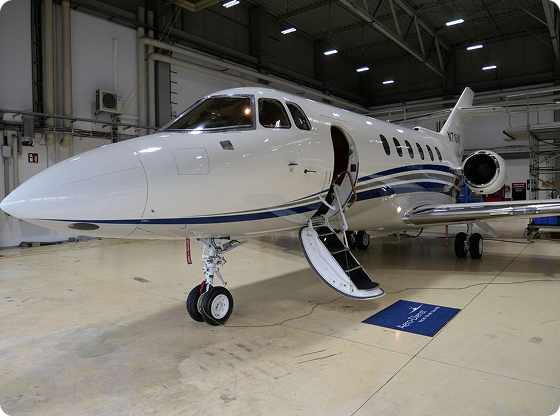
The Phenom 300 is a twin-engine light jet by Embraer, in commercial service since 2009 and consistently the world’s most delivered light jet. Certified for single-pilot operation with up to eight passengers, it delivers range, speed, and cabin refinement that define the reference standard for its category across every major business aviation market.

Performance and Design
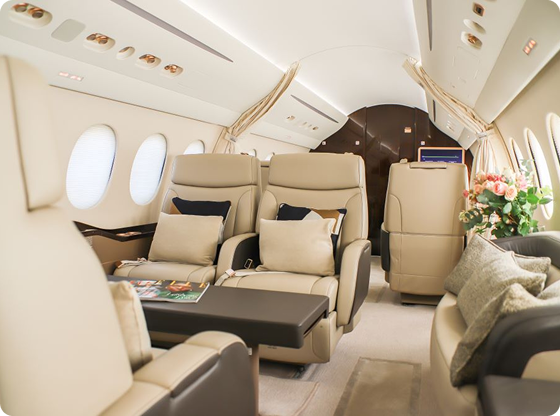
Twin Pratt & Whitney Canada turbofan engines power the Phenom 300 to a 45,000-foot service ceiling, placing it above weather and commercial traffic on every sector. The BMW Designworks cabin — featuring an enclosed private lavatory and generous external baggage capacity — sets a standard for refinement that few light jets approach. The Garmin Prodigy avionics suite supports both single-pilot and dual-crew operations.
Safety and Standards
The Phenom 300 is operated by ACASS under IS-BAO Stage 3 and ARGUS Gold standards — a combination that fewer than a small number of management operators globally can demonstrate. For owners and flight departments evaluating management partners, these credentials represent an independently verified commitment to safety culture, operational procedures, and continuous oversight that distinguishes a true aviation consultant from the broader market.
Understanding the 300E
-
Original Phenom 300
The pre-2018 Phenom 300 established the platform’s market leadership with the Garmin Prodigy flight deck, twin Pratt & Whitney Canada turbofan engines, and a maximum range of 1,971 nautical miles. This generation defines the baseline performance standard against which all subsequent variants are evaluated in the pre-owned market.
-
First 300E Generation (2018)
The 2018 Phenom 300E introduced a redesigned cabin interior with updated materials and transitioned the flight deck to the Prodigy Touch suite based on the Garmin G3000 — a meaningful avionics upgrade in interface and functionality. Operational performance remained consistent with the pre-300E aircraft on this variant.
-
Current 300E Generation (2020)
The 2020 update introduced PW535E1 engines, raising maximum thrust, increasing cruise speed to Mach 0.80, and extending range to 2,010 nautical miles. For buyers evaluating pre-owned inventory, the distinction between these three generations represents materially different performance standards, avionics configurations, and positions within the current pre-owned market.
Ideal Mission Profiles
The Phenom 300 excels on frequent domestic and regional sectors, with short-field performance reducing ground transfer time at both ends of each journey. Corporate flight departments running two to four daily sectors benefit from the 300E’s class-leading speed on every leg. ANAC, FAA, and EASA type certification simplifies multi-jurisdiction operations for teams whose itineraries regularly cross regulatory environments.

The ACASS Advantage
ACASS manages Phenom 300 operations under IS-BAO Stage 3 and ARGUS Gold standards, with AOC authority across Canada, Ireland, and San Marino delivering multi-jurisdiction flexibility that single-jurisdiction programmes cannot match. Owners may place their aircraft into ACASS’s direct AOC charter programme, offsetting operating costs while retaining priority access. Dedicated account management provides ongoing operational visibility and cost transparency. Own Your Journey®.
Acquisition and Charter
ACASS supports Phenom 300 and Phenom 300E acquisitions through a consultative process covering mission profiling, pre-purchase evaluation, airworthiness review, and multi-jurisdiction regulatory guidance. Charter availability can be confirmed directly with the ACASS team. With 30+ years of active business aviation transactions and $2B+ in completed deals as an IADA Accredited Dealer, ACASS brings operator-level expertise to every mandate. Connect With a Specialist.
Frequently Asked Questions
-
Yes. The Phenom 300 features an enclosed private lavatory at the rear of the cabin, fully enclosed rather than semi-enclosed — a distinction that is meaningful on longer sector operations and that differentiates it from some competing light jets where lavatory facilities are open or absent. The lavatory is standard across all Phenom 300 and 300E variants and does not require the use of a passenger seat as a substitute. The rear cabin layout accommodates the lavatory without reducing the standard six-seat passenger configuration. For operators prioritising cabin privacy on regional and transatlantic sectors, this remains one of the Phenom 300’s most consistent advantages within its category.
-
The Phenom 300E has a published maximum range of approximately 2,010 nautical miles, which places certain transatlantic sectors within reach under favourable conditions. For a full North Atlantic crossing, a technical stop is typically required under standard routing and payload conditions. Routing, winds, weather, and payload all affect the effective range on any given mission. Operators requiring regular non-stop transatlantic capability without a fuel stop should evaluate a midsize or super-midsize jet as the appropriate aircraft class for that mission profile. An ACASS specialist can assess the right aircraft category and routing options based on specific operational requirements.
-
The 2018 Phenom 300E update focused on cabin refinements and the introduction of the Prodigy Touch avionics suite based on the Garmin G3000. The 2020 Phenom 300E went further, introducing PW535E1 engines that raised maximum speed to Mach 0.80 and extended range to 2,010 nautical miles. For buyers evaluating pre-owned aircraft, these generational distinctions are material in terms of performance capability, avionics specification, and market positioning — each represents a meaningfully different aircraft despite sharing the same designation. Understanding these differences is essential to aligning the right variant with long-term operational and ownership objectives. Consulting an IADA Accredited Dealer with active Phenom 300 market knowledge is advisable before committing to any variant.
-
The Phenom 300 and 300E are both certified for single-pilot operation. A second pilot is not required by type certification, though many operators choose to fly with two pilots for operational continuity, safety margin, and duty-time management on longer missions. Corporate flight department policies and insurance requirements vary. ACASS operates the Phenom 300 under its own Air Operator Certificate with crew managed to the operator’s own safety standards and IS-BAO Stage 3 compliance requirements, regardless of whether the aircraft is flown single or dual-crew. Crew configuration, scheduling, and oversight can all be addressed as part of a broader aircraft management consultation with a dedicated ACASS specialist.
-
Acquiring a Phenom 300 involves aircraft selection, pre-purchase inspection, airworthiness review, and registration support across the applicable regulatory jurisdiction — a process that benefits from a consultant with direct knowledge of the Phenom 300 and 300E pre-owned market. ACASS provides consultative acquisition support as an IADA Accredited Dealer, beginning with a conversation about the client’s mission profile and operational requirements. Management programme terms are structured around the specific aircraft, its usage profile, and the owner’s operational objectives. Each mandate is approached as a long-term partnership rather than a single transaction. Connect With a Specialist to begin the acquisition or management consultation process.
