
Our
Locations
-
World HQ

6700 Côte de Liesse, suite 206,
+1 514 636-1099
Montréal, Canada,
H4T 2B5 -
Ireland

Suite 3230, Building 3000, Westpark Business Campus, Shannon, Clare, V14 AN29
+353 61 475 802 -
San Marino

World Trade Center, Via Consiglio dei Sessanta,
+39 0549 942-551
99, 47891 Dogana, San Marino


Heavy Jet vs Ultra Long Range Jet: Which Fits Your Mission?
The choice between a heavy jet and an ultra long range business jet turns on mission fit — not specification sheets. ACASS starts there.
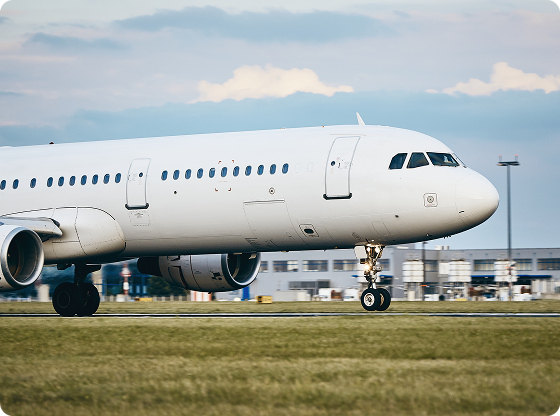
Defining the Categories
Heavy jets cover 3,500–6,000 nm non-stop with full stand-up cabins for 10–16 passengers. Ultra long range jets extend to 6,500–8,000+ nm with zone-based cabins — master suite, conference area, crew rest — built for 12-hour-plus missions. The boundary is clearest at 6,000 nm. The Gulfstream G550 and Bombardier Global 5500 straddle both categories, representing a genuine decision point for clients in the 5,500–7,000 nm band.

Range and Route Capability — The Core Differentiator
Raw range figures mean less than route application. Heavy jet range covers the majority of intercontinental missions — Montréal to London, New York to Paris — while the ULR category eliminates fuel stops on sectors the heavy jet cannot complete non-stop: New York to Dubai, London to Singapore. If primary routes consistently exceed 6,000 nm, the ULR category is operationally justified; below that threshold, the heavy jet covers the mission.
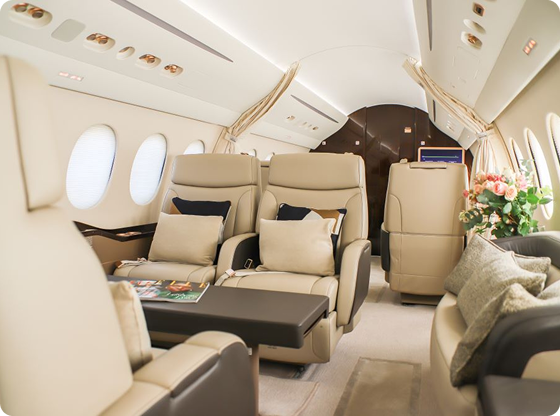
Cabin Experience and Passenger Comfort
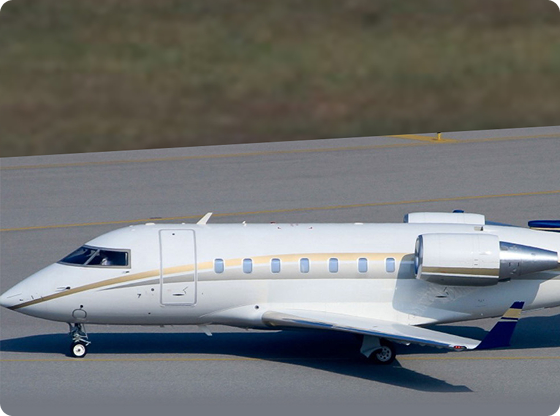
Both categories deliver full stand-up cabins. The distinction is endurance architecture: heavy jet cabins are built for eight to ten hours; ULR cabins — with zone separation, private rest provisions, circadian lighting, and low-altitude pressurization — are designed for 12 to 16 hours. Representative heavy jet examples include the Bombardier Challenger 605 and Dassault Falcon 900LX; ULR flagships include the Gulfstream G700, Bombardier Global 7500, and Dassault Falcon 8X.
Mission Variables That Drive the Decision
No specification sheet determines the right category. Five variables drive the decision: route profile against non-stop range requirements; passenger count and its inverse effect on payload; crew duty time and rest regulations on sectors exceeding ten hours; runway availability at secondary airports across Africa, the Middle East, and South Asia; and charter utilization profile relative to the owner’s primary mission. Category fit emerges from applying all five.
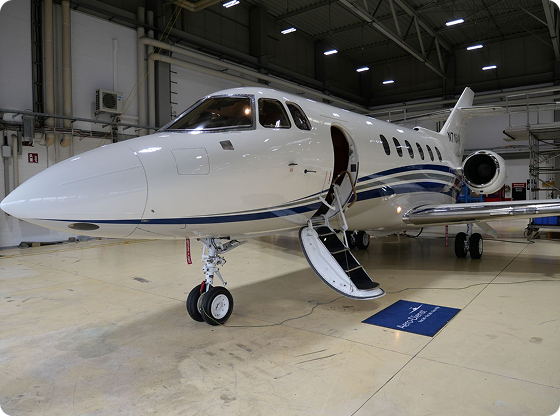
Aircraft Management and Category Selection
For aircraft owners, the more consequential dimension is how the aircraft is managed, maintained, and utilized across its operational life. A ULR jet under a structured aircraft management programme can support charter operations — but only if the management partner holds multi-jurisdiction AOC authority. The right category decision for ownership depends on mission profile and management programme requirements, not range figures alone.
How ACASS Approaches This Decision With Clients
ACASS has advised aircraft owners and operators across both categories for over 30 years and in more than 56 countries. As a direct AOC operator — not a broker — ACASS holds Canadian, Irish, and San Marino certificates, with IS-BAO Stage 3 certification since 2017 and ARGUS Gold since 2013 applied across the managed fleet. ACASS’s role is to model the mission, not recommend a model.
Frequently Asked Questions
-
Among purpose-built ultra long range business jets, the Bombardier Global 8000 and Gulfstream G700 lead the range category at approximately 8,000 nm and 7,750 nm respectively under manufacturer-stated conditions. Real-world performance varies with payload, wind routing, and cruise altitude. Mission profile, airport access, and payload configuration determine which aircraft delivers the best real-world performance for a specific route.
-
Heavy jets typically operate in the 3,500–6,000 nm range with 10–16 passengers in single or dual-zone cabin configurations. Ultra long range jets exceed 6,500 nm non-stop and are configured with dedicated zones — master suite, conference area, galley — for missions of 12 hours or more. The primary distinction is range capability and zone-based cabin architecture, not cabin size.
-
Yes — heavy jets with range above 4,500 nm can complete many transatlantic routes, particularly eastbound where prevailing tailwinds assist the crossing. Montréal to Paris and Dublin to Toronto fall within the heavy jet envelope under standard conditions. Westbound crossings — New York to London, Toronto to Dublin — may require a technical stop depending on aircraft, payload, and winds. Routing should be confirmed during mission planning.
-
Most ultra long range jet charter configurations seat 12–16 passengers. Flagship models including the Gulfstream G700 and Bombardier Global 7500 can accommodate up to 19 in high-density configurations, though most mission configurations run fewer for long-duration sectors. Passenger count directly affects range: payload and range are inversely related, making payload management a critical variable on ultra-long sectors where full range margins are needed.
-
The Gulfstream G800 succeeds the G700 as Gulfstream’s flagship ultra long range business jet, with extended range of approximately 8,000 nm versus the G700’s 7,750 nm. The G700 offers greater interior cabin length; the G800 prioritizes range efficiency over additional interior volume. Both compete with the Bombardier Global 7500 and Global 8000. Mission profiling with an experienced operator is the correct starting point for this decision.
-
Connect With a Specialist at ACASS — a direct AOC operator with IS-BAO Stage 3 and ARGUS Gold certification across Canada, Ireland, and San Marino — to begin mission profiling.
