Our
Locations
World HQ

6700 Côte de Liesse, suite 206,
+1 514 636-1099
Montréal, Canada,
H4T 2B5Ireland

Suite 3230, Building 3000, Westpark Business Campus, Shannon, Clare, V14 AN29
+353 61 475 802San Marino

World Trade Center, Via Consiglio dei Sessanta,
+39 0549 942-551
99, 47891 Dogana, San Marino

How to Charter a Private Jet: Step-by-Step Guide (2026)

If you’re looking to charter a private jet for the first time, the process can feel more complicated than it actually is. The pricing seems opaque, the terminology unfamiliar, and the steps unclear. But understanding exactly what happens between your first inquiry and wheels-down removes that uncertainty entirely.
This guide walks you through how to charter a private jet in Canada, step by step, from preparing your trip details to boarding at the FBO. Whether you want to rent a private jet for a single trip or explore what an ongoing charter relationship looks like, this guide provides the complete picture for Canadian travelers in 2026.
What Does It Mean to Charter a Private Jet?
When you charter a private jet, you’re booking exclusive use of an entire aircraft for your trip. No shared cabin, no fixed departure schedule, no other passengers. The aircraft flies on your timeline, to your chosen airports, with your group only.
Private jet chartering differs from fractional ownership or jet card programs, which require upfront capital commitments, management fees, or long-term contracts. Chartering a private jet on demand requires none of that. You book the flight you need, pay for that flight, and the transaction is complete.
There are two paths to book a private jet. You can go through a broker, an intermediary agent who sources aircraft from multiple operators and adds a coordination layer and commission on top. Or you can book directly with a licensed charter operator like ACASS, which controls its own fleet, provides direct quotes, and is accountable for every aspect of the flight.
Booking direct eliminates the broker markup. It also means a single point of contact who knows the aircraft, knows the crew, and has direct authority to resolve anything that comes up. For Canadian travelers, booking direct with a Canadian-licensed operator adds a layer of regulatory accountability that booking through a foreign broker or US-based reseller simply cannot match.
Private jet charter in Canada serves a wide range of travelers: business executives managing tight itineraries, families whose schedules commercial airlines can’t accommodate, medical transport patients, sports teams moving between cities, and remote site operators reaching destinations commercial aviation doesn’t serve.
Step 1 — Know What You Need Before You Call
The fastest path to an accurate quote when you charter a private jet is arriving at that conversation prepared. Operators like ACASS can right-size an aircraft and price a route far more precisely when a few key details are already in hand.
Start with your routing. Where are you departing from, and where are you going? Private jets for charter have access to thousands more airports than commercial airlines, including regional airports across Canada that commercial carriers bypass entirely. If your destination is near a smaller airfield, chartering a private jet can get you much closer to where you actually need to be.
Know your passenger count and any specialty cargo requirements. Golf bags, skis, pets, medical equipment, and oversized luggage all affect aircraft selection. A number that sounds simple, like eight passengers, narrows the aircraft category quickly when significant baggage is also in the picture.
Have your travel dates ready and be honest about your flexibility. Same-day arrangements are possible depending on aircraft availability, but knowing you want to book a private jet 24 to 72 hours out opens up more options and better pricing. If you have date flexibility, say so early in the conversation.
Think through your preferred in-flight experience, including catering preferences, Wi-Fi connectivity, lie-flat seats for longer legs, and ground transport coordination at the destination. These details don’t need to be finalized before your first call, but knowing what matters to your group helps the operator match the right aircraft to the mission.
Finally, have a general sense of your budget. A range helps the operator recommend the right aircraft category without overselling the trip or undersizing the cabin.
Step 2 — Choose the Right Aircraft for Your Trip
You don’t need to know specific aircraft models to charter a private jet. What you need is a general sense of which category fits your passenger count, route distance, and cabin expectations.
Light jets typically seat four to six passengers and are suited for flights up to approximately three hours. Toronto to Montreal, Calgary to Vancouver, Ottawa to Quebec City — these are ideal light jet routes when you rent a private jet for shorter regional travel.
Midsize jets accommodate six to eight passengers, offer extended range, and typically feature stand-up cabins. They’re transcontinental-capable and well-suited for routes that extend beyond light-jet range.
Super midsize jets carry eight to ten passengers and are built for coast-to-coast Canadian routing or Canada-to-US routes without a fuel stop. For private jet charter in Canada, this category is well-suited to routes of this distance.
Large-cabin and ultra-long-range jets seat up to 16 passengers and are designed for international nonstop routes. These are the aircraft for Toronto to London, Vancouver to Tokyo, or any itinerary where range and cabin comfort over many hours are priorities.
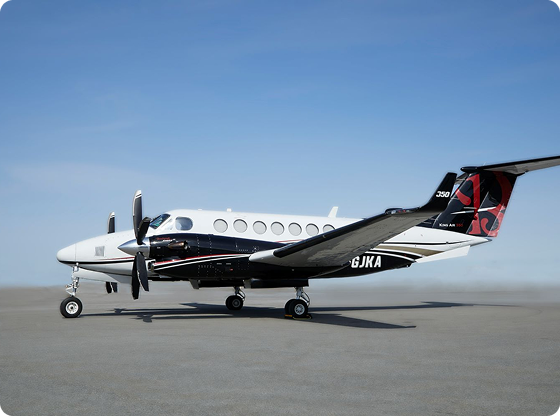
The right-sizing principle is simple: match the aircraft to the mission. There is no pressure to upgrade beyond what the trip requires. For remote northern destinations in Canada, turboprops perform exceptionally well on shorter runways and provide regional access that jets can’t always match.
Broker vs. Direct Operator — Which Should You Use?
A broker sources private jets for charter from multiple operators, earns a commission on the booking, and acts as a coordination intermediary. For clients who want someone to shop around for multiple options, brokers serve a useful role.
A direct operator controls its own fleet. When you charter a private jet through ACASS, you’re quoting directly from aircraft the company manages, with one team accountable for every operational decision from first call to landing. There is no third party in the middle and no commission layer in the pricing.
For Canadian clients, booking directly with a Canadian operator means Transport Canada regulatory accountability, no cross-border markup, and an operator who understands Canadian airports and cross-border documentation requirements through direct operational experience.
Step 3 — Request a Quote and Review Your Options
Requesting a quote to charter a private jet is not a commitment. It is a structured conversation about whether a flight works logistically and commercially for your specific trip.
To get an accurate quote, provide your route, dates, passenger count, and any preferences for the aircraft or in-flight experience. The more complete the information, the more precise the quote.
A well-structured charter quote itemizes the aircraft type, hourly rate, positioning fees, fuel surcharges, landing fees, and applicable taxes. When comparing quotes to rent a private jet, look at the transparency of line items rather than the headline number alone. A lower total that obscures fees is not a better deal.
The charter agreement covers the terms of the booking, cancellation policy, repositioning clauses, and force majeure language. Review these before signing. Understanding what happens if your plans change is part of making an informed decision when you book a private jet.
For travelers who charter more than occasionally, it’s worth understanding the difference between one-off on-demand booking and establishing a charter account. A charter account establishes a standing relationship with an operator, typically resulting in faster quoting, preferred availability, and a team that already knows your standards.
Step 4 — Confirm, Sign, and Prepare for Departure
Once you’ve accepted a quote and decided to charter a private jet, the operational preparation begins.
Signing the charter agreement commits both parties to the flight. Review the cancellation policy and confirm that the aircraft type, route, and dates match exactly what was quoted.
Passenger manifest submission follows. Operators are required to have full legal names and identification details for every passenger before departure. For domestic Canadian flights, government-issued photo ID is standard. For international flights, passports are required for all passengers.
Canadian cross-border flights carry documentation requirements that most how-to guides on how to charter a private jet fail to address. If you’re flying from Canada to the US or an international destination, CBSA pre-clearance and customs documentation must be in order before you board. Depending on your destination, visa requirements may apply to some passengers. Your ACASS team walks through what’s required for your specific route well in advance.
On departure day, arrive at the FBO 15 to 30 minutes before your scheduled departure. There is no security queue, no bag drop, no boarding gate. You check in at the private terminal and proceed directly to the tarmac.
Ground transport coordination at both ends can be arranged through ACASS as part of the pre-departure planning process.
Step 5 — What to Expect on the Day of Your Flight
The FBO is a private terminal that operates very differently from the nearby commercial airport building. Before your flight, confirm the specific FBO address with your operator. Navigation apps frequently route to the wrong entrance, and on a tight departure schedule, that is an avoidable problem.
Check-in takes minutes. You’ll be greeted by staff, your documents confirmed, and you’ll move through to the tarmac without queues, without security screening, and without a baggage carousel on arrival.
The crew introduction happens before boarding. If you’d like a cabin walkthrough, the crew will provide one. For first-time private-jet charterers, this is the moment the experience shifts from abstract to concrete.
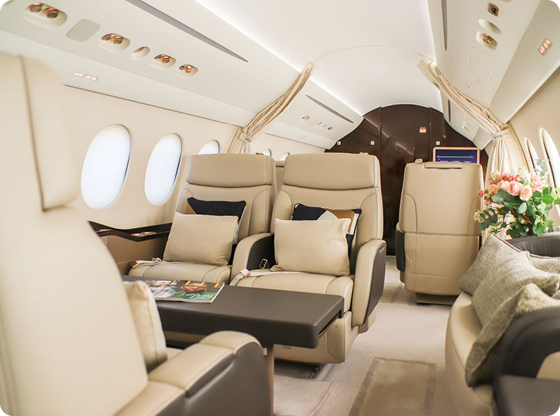
In-flight, the cabin is yours. Catering is served to the specification provided during booking. Wi-Fi is available on equipped aircraft. You have full privacy to work, rest, take calls, or hold a working session without interruption.
On arrival, your bags are delivered directly to you, and, if arranged, ground transport is waiting.
What Drives the Cost of Chartering a Private Jet in Canada?
The most common question from those looking to charter a private jet for the first time is also the one that most directly shapes aircraft selection and trip planning. Cost is determined primarily by aircraft category, route distance, positioning requirements, and seasonal demand — understanding each variable makes for a more productive quote conversation.
Aircraft category carries the most weight. A light jet optimized for short regional routes operates under a fundamentally different cost structure than a super midsize or large-cabin aircraft built for transcontinental or transatlantic flying. Matching the aircraft to the mission — rather than defaulting to a larger cabin than the trip requires — is the most effective way to approach the conversation.
Route distance and aircraft positioning are the second and third most significant factors. Positioning refers to how far an aircraft must travel to reach your departure point or return to its base afterward. One-way trips carry some positioning component in the quote — this is standard across the industry.
Empty leg flights are worth understanding as a booking option when you charter a private jet one-way. When an aircraft needs to reposition without passengers, that leg becomes available to book. Empty leg flights represent a significant cost opportunity for flexible travelers whose routing aligns with an available repositioning flight. ACASS publishes available empty-leg flights for clients who want to explore this option.
When you charter a private jet through ACASS, all charges are broken out by line item. There are no hidden fees, no aggregate numbers that obscure what you’re paying for. Contact us for a quote specific to your route, dates, and aircraft requirements.
How ACASS Approaches Charter Differently
ACASS is a Canadian operator holding a Transport Canada air operator certificate. Not a broker, not a US-based reseller. When you charter a private jet through ACASS, you’re working with a Canadian operator that has direct fleet control, Canadian regulatory accountability, and operational experience built from managing private aircraft on behalf of owners across the country.
That fleet management background matters. The standards applied to aircraft ACASS manages — reflected in IS-BAO Stage 3 certification and ARGUS Gold accreditation — reflect ownership-level expectations, not the minimum required to move a charter client from point A to point B. Crew selection, maintenance standards, and cabin preparation are managed directly, not outsourced to a third-party operator selected at the time of booking.
The client model is built around a single point of contact from the moment you request a quote to wheels-down at your destination. One team, one relationship, end-to-end. Whether you’re looking to rent a private jet for a one-time trip or establish an ongoing private jet charter relationship in Canada, ACASS is structured to support both.
Explore the ACASS charter approach, view aircraft available for charter, or get in touch to discuss a specific route.
Frequently Asked Questions
What do you need to charter a private jet?
Knowing how to charter a private jet starts with having the right documents and details ready before your first call. For domestic Canadian flights, a government-issued photo ID and your travel details are sufficient to proceed. For international flights, a valid passport is required for every passenger, and depending on your destination, some travelers in your group may need visa documentation. You’ll also need to provide a complete passenger manifest with full legal names and identification details before departure. Chartering a private jet requires no medical certification or financial qualifications. The booking process is open to any passenger, provided travel documents are appropriate for the route and destination.
How far in advance do you need to book a private jet charter in Canada?
When it comes to private jet charter bookings in Canada, lead time depends on your flexibility and preferred aircraft category. On-demand charters can be arranged with as little as a few hours’ notice, provided the right aircraft is available at the time of inquiry. To book a private jet with more selection and pricing flexibility, a lead time of 24 to 72 hours is recommended. This gives operators time to confirm aircraft availability, crew, and any route-specific handling requirements. During peak travel periods, including major holidays, long weekends, and large events, earlier booking is strongly recommended. Demand rises sharply around these windows, and preferred aircraft categories can fill quickly.
How does chartering compare to fractional ownership for infrequent flyers?
The right model depends on how often you fly and what level of commitment works for your situation. On-demand charter requires no upfront capital — you book the flight you need, pay for that flight, and the transaction ends there. No monthly management fees, no long-term contracts, no minimum usage requirements beyond the individual booking.
Fractional ownership is structured for high-frequency flyers — typically those logging 50 or more hours per year — who value guaranteed availability and a consistent cabin experience. Below that usage level, a fractional share ties up significant capital against limited flight hours.
For travelers with variable or unpredictable schedules, on-demand charter provides access to the right aircraft for each trip, whether a light jet for a short regional hop or a large-cabin aircraft for a transatlantic route. An ACASS specialist can help you assess which model best fits your flying profile.
Can you charter a private jet for a one-way flight in Canada?
Yes, one-way trips are entirely standard when you book a private jet in Canada. The quote will include any repositioning costs associated with the aircraft traveling to or from a base location, which is a normal part of how one-way charter pricing is structured across the industry. Empty leg flights offer a cost-effective alternative for one-way travel when a repositioning leg aligns with your route. Private jets already repositioning between assignments can be booked at significantly reduced rates. ACASS publishes available empty legs, making it straightforward to identify whether a reduced-rate option exists for your departure city and destination before committing to a full standard quote.
What is an FBO, and where do you go to board a private jet?
One of the first things you learn when figuring out how to charter a private jet is that departure happens from a different location than the commercial terminal. FBO stands for Fixed-Base Operator, a private terminal facility physically separate from the main airport building. You check in at the FBO, bypass standard security screening, and board directly from the tarmac. For private jet charters in Canada, travelers can access most major airports with dedicated FBO facilities, including Toronto Pearson, Vancouver International, Calgary International, and Montreal Trudeau. Before departure, confirm the FBO address directly with your operator. Standard navigation apps frequently route to the commercial terminal entrance rather than the correct private facility location.