
Our
Locations
-
World HQ

6700 Côte de Liesse, suite 206,
+1 514 636-1099
Montréal, Canada,
H4T 2B5 -
Ireland

Suite 3230, Building 3000, Westpark Business Campus, Shannon, Clare, V14 AN29
+353 61 475 802 -
San Marino

World Trade Center, Via Consiglio dei Sessanta,
+39 0549 942-551
99, 47891 Dogana, San Marino


Light Jet Aircraft
The light jet category delivers pressurized twin-engine performance, scheduling freedom, and dedicated cockpit capability that commercial aviation cannot match. Own Your Journey®.
Connect With a Specialist
Defining the Category
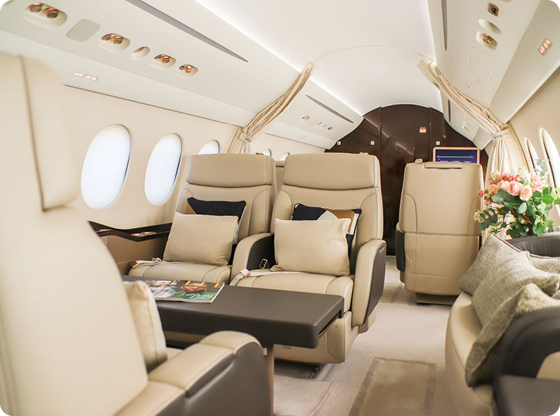
The light jet bridges the gap between very light jets and midsize aircraft — typically seating four to eight passengers across a pressurized cabin, with non-stop range approaching 1,500 nautical miles and cruise speeds exceeding 400 knots. It is the entry point where corporate travel departments consistently invest and where ownership economics become genuinely viable.
Cabin and Performance
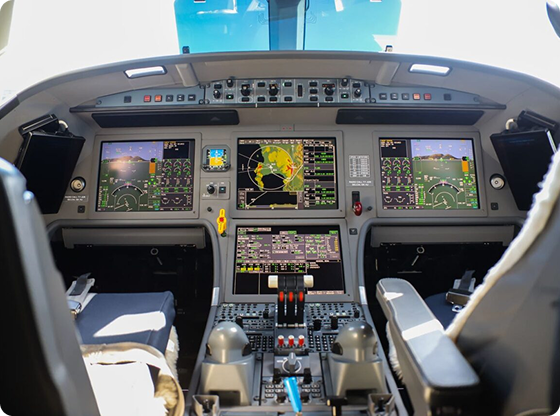
Light jets cruise at FL410 to FL450, delivering non-stop range approaching 1,500 to 1,700 nautical miles at speeds between 400 and 450 knots. Club seating for four to eight passengers, onboard connectivity, and enclosed lavatory options define the modern cabin. Stand-up headroom and a dedicated galley are midsize category attributes — expectations should be set accordingly.
Popular Light Jets
The Embraer Phenom 300 series, Cessna Citation CJ4, and Bombardier Learjet 75 Liberty represent the most operationally established platforms in the light jet category. Each delivers proven reliability, strong pre-owned market support, and documented maintenance histories — criteria ACASS evaluates as part of every acquisition mandate. A specialist can align the right platform to your mission profile.
Light Jet Applications
-
Regional Routes and Sectors
Light jets are purpose-built for two- to three-hour regional missions — Montreal to Toronto, London to Zurich, Dubai to Riyadh. Fast dispatch capability and direct airport access produce time savings that commercial scheduling cannot replicate. For operators running large cabin aircraft on intercontinental sectors, a light jet handles regional legs with a leaner operational structure.
-
Secondary Airport Access
Short-field performance is among the light jet’s most commercially significant attributes. Access to regional airports eliminates drive time at origin and destination — a material advantage for clients in logistics, extractive industries, and professional services operating across secondary locations that commercial aviation does not serve with consistent, schedule-independent frequency.
-
Small-Team Executive Travel
For groups of four to six traveling on time-critical sectors where speed and privacy outperform the commercial alternative, the light jet delivers genuine business aviation capability at the category’s most accessible operating footprint. Corporate travel departments running predictable regional routes consistently find the light jet the most operationally efficient structure for small-team executive movement.

Charter, Ownership, Management
Light jet access takes three forms: charter for variable travel volumes, acquisition where annual hours justify ownership economics, and managed operations for owners seeking professional program oversight. ACASS supports all three as a direct AOC holder in Canada, Ireland, and San Marino — not a broker intermediary. Connect with a Specialist to determine the right structure for your mission profile and fleet objectives.

The ACASS Difference
ACASS holds direct Air Operator Certificates in Canada (2004), Ireland (2020), and San Marino (2015) — making ACASS the operator of record on every charter, not a broker intermediary. IS-BAO Stage 3 (2017) and ARGUS Gold (continuously since 2013) govern every operation. For acquisition, IADA Accredited Dealer standing since 2019 and $2B+ in transactions underpin every light jet mandate. Own Your Journey®.
Safety Standards Explained
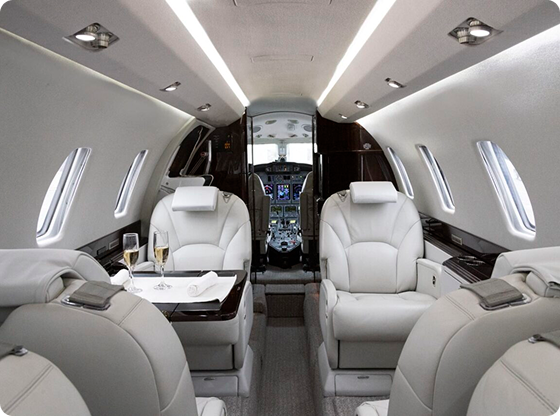
IS-BAO Stage 3 — the highest certification level under the International Business Aviation Council — requires a fully integrated Safety Management System and demonstrated organizational commitment to proactive risk management. ARGUS Gold provides an independently audited rating covering crew qualifications, training, and maintenance practices. Together, they confirm safety is managed systematically across every operation, including light jet charter and management.
Frequently Asked Questions
-
A light jet is a business jet typically configured for four to eight passengers, with a non-stop range of approximately 1,500 to 1,700 nautical miles and cruise speeds between 400 and 450 knots. The category sits between the very light jet and the midsize jet and is defined by cabin class and operational positioning rather than a formal regulatory weight limit. Most light jets exceed the FAA’s formal “Light Aircraft” maximum gross takeoff weight threshold, which is why the industry term refers to the aircraft’s role, not a regulatory designation.
-
Standard light jet configurations accommodate four to eight passengers depending on the specific model and interior layout. The six-passenger club configuration is the most common real-world setup in corporate and charter operations. Some models offer convertible seating to accommodate additional passengers at the cost of available baggage capacity. Passenger count directly affects payload, which in turn influences effective non-stop range — a planning consideration on full-capacity departures that ACASS Charter Specialists address as part of the mission planning process.
-
The light business jet operates within a smaller footprint than the midsize category while retaining genuine business jet performance. It provides access to secondary and regional airports that midsize jets cannot serve, due to more favorable runway performance requirements. Dispatch and turnaround times on regional sectors are typically shorter, making the light jet a strong choice for multi-leg same-day operations. A well-developed pre-owned market on major platforms also provides well-documented acquisition opportunities with strong maintenance histories.
-
The clearest functional dividing line is stand-up cabin height: midsize jets offer it as a standard feature, light jets do not. Range is the second meaningful difference — midsize jets extend to 3,000 nautical miles and beyond, while light jets typically operate within a 1,700 nautical mile non-stop envelope. Passenger comfort, baggage capacity, and full-galley capability also increase at the midsize level. For missions under 1,500 nautical miles with groups of four to six passengers, the light jet is typically the operationally appropriate and more efficient choice.
-
Arranging light jet charter services through ACASS begins with a direct conversation with a Charter Specialist covering your departure date, sector, passenger count, and any specific cabin or logistics requirements. Working with a direct AOC holder means your enquiry goes directly to the operator rather than through a broker intermediary, which affects both accountability and the accuracy of the response you receive. Charter terms vary based on aircraft availability, sector length, positioning, and operational requirements — a specialist consultation provides a more precise and tailored outcome than any published framework. Connect with a Specialist to begin planning your light jet charter.
Own Your Journey®.
