
Our
Locations
-
World HQ

6700 Côte de Liesse, suite 206,
+1 514 636-1099
Montréal, Canada,
H4T 2B5 -
Ireland

Suite 3230, Building 3000, Westpark Business Campus, Shannon, Clare, V14 AN29
+353 61 475 802 -
San Marino

World Trade Center, Via Consiglio dei Sessanta,
+39 0549 942-551
99, 47891 Dogana, San Marino


Super Midsize Jets
The super midsize jet delivers more range and cabin volume than a midsize, without the operating commitment of a heavy jet. ACASS guides every decision.
Connect with a Specialist
What Is a Super Midsize?
A super midsize jet sits between the midsize and the heavy jet — built to close a gap where operators needed more range and cabin volume without a heavy jet’s operational infrastructure. Key specs: a stand-up cabin of 5’9″ to 6’2″, seating for seven to 12 passengers, and 3,000 to 4,500 nautical miles of range — enough for coast-to-coast US nonstop or transatlantic with a fuel stop.

Cabin and Performance
Cabins run 22–30 feet long, five to six feet wide, with a stand-up height of 5’9″–6’2″ — operationally significant on missions over four hours. Flat-floor layouts, double-club seating, galley, lavatory with vanity, Wi-Fi, and 80–100+ cubic feet of baggage are all standard. Cruise speeds reach 450–528 KTAS. Against a midsize’s 4’9″–5’3″ ceiling and 2,000–2,800 nm range, the upgrade delivers a clear operational return on mission profile.
Sales and Acquisitions
The super midsize market rewards buyers with structured acquisition support. Airframe history, avionics generation, maintenance program status, and pre-owned market dynamics all vary meaningfully by model. ACASS’s sales consultants bring $2B+ in completed transactions to every mandate — evaluating aircraft against your mission profile, managing due diligence, and coordinating delivery to ensure the aircraft you acquire performs precisely as expected.
Super Midsize Jet Models: A Buyer's and Operator's Reference
-
The Category Flagship: Bombardier Challenger 350
The Bombardier Challenger 350 defines the super midsize standard. With the widest cabin in its class, a range of 3,200 nm, and capacity for up to 10 passengers, it commands strong residual values and a deep pre-owned market. For buyers seeking a proven platform with broad type-rated crew availability, the Challenger 350 remains the most referenced aircraft in the category.
-
Extended Range and Speed Leaders
For operators where range or velocity is the primary acquisition driver, two aircraft stand apart. The Gulfstream G280 leads the category at 3,600 nm — purpose-built for transatlantic and Middle Eastern route networks. The Cessna Citation X+, the fastest aircraft in class, is engineered for missions where schedule compression matters. Both reward operators with specific, demanding route profiles that the broader category cannot match.
-
Specialized Performance and Short-Field Access
Not every super midsize jet mission departs from a long runway. The Cessna Citation Latitude accesses airports other jets in its class cannot, combining a flat-floor cabin with outstanding short-field performance. The Dassault Falcon 50EX — with its tri-engine design — delivers superior high-altitude and mountainous-terrain access. Both aircraft serve operators whose network demands flexibility that range figures alone do not capture.
Jet Category Comparison
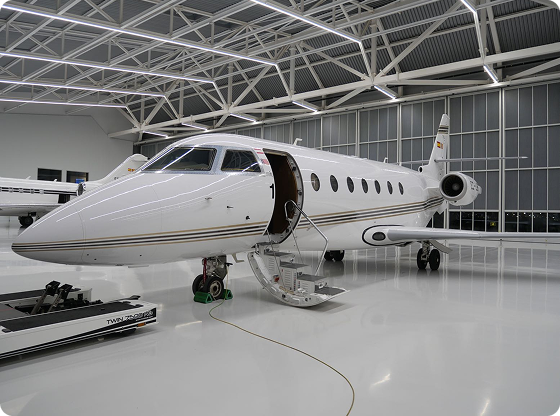
Against a standard midsize, the super midsize delivers a stand-up cabin, 600–1,200 nm of additional range, and two to four more passenger seats. Against a heavy jet, it delivers a purpose-built solution for its optimized mission: three to seven hours, six to 10 passengers, transcontinental routing. Operators whose itineraries don’t require heavy jet capability consistently find the super midsize is the more operationally aligned choice.
Ownership and Operations
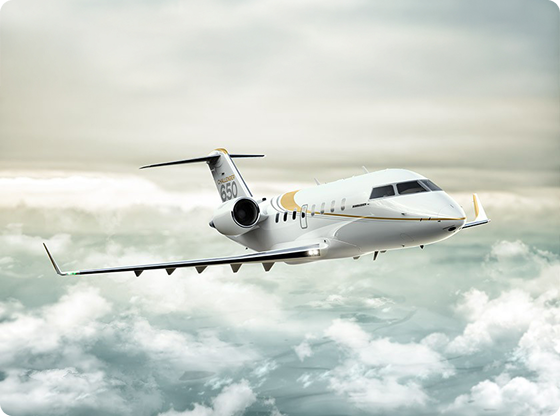
Operating a super midsize requires an AOC, CAMO function, crew qualification management, insurance, and safety audit certification — regulatory overhead that consistently exceeds initial expectations. Most private owners engage a professional aircraft management company. ACASS holds IS-BAO Stage 3 and ARGUS Gold certification, with AOCs in Canada, Ireland, and San Marino.
Owners who elect to place their aircraft on a charter certificate extend its operational utility during unscheduled periods. Connect with a specialist.

Crew and Staffing
A super midsize requires two type-rated pilots — ratings are model-specific and non-transferable, so fleet transitions require structured recurrency management. Contract crew offer flexibility; permanent placement builds SMS continuity. Multi-jurisdiction operators need a staffing intermediary to manage foreign license validations and employer-of-record compliance. ACASS’s flight crew staffing team handles sourcing, vetting, psychometric assessment, placement, and ongoing compliance as a single accountable service.
Frequently Asked Questions
-
A super midsize jet is a business aircraft class positioned between the midsize and heavy jet, defined by a stand-up cabin (5’9″ to 6’2″), seating for seven to 12 passengers, and a range of 3,000 to 4,500 nautical miles. The category emerged as operators sought a purpose-built solution for transcontinental missions that outgrew midsize range limits without requiring full heavy jet infrastructure. Widely recognized models include the Bombardier Challenger 350, Gulfstream G280, Embraer Praetor 500, and Cessna Citation Latitude. Mission profile — not aircraft size alone — typically determines whether the super midsize is the right operational category. ACASS advises on this as part of its acquisition process.
-
Super midsize jet acquisition decisions turn on five interdependent variables: airframe age and total time, avionics generation, maintenance status and program enrollment, interior configuration, and market availability within the target model. Each factor affects how the aircraft performs in service and how it positions in the resale market. The Bombardier Challenger 350, Gulfstream G280, and Embraer Praetor 500 each carry different pre-owned market dynamics — rewarding buyers who approach acquisition with structured due diligence. A complete picture requires mission profiling, market search, pre-purchase inspection, and delivery oversight coordinated by an experienced aviation advisor. ACASS manages this process end to end. Connect with an ACASS specialist.
-
Super midsize jet range runs from approximately 2,700 to 3,600 nautical miles depending on model, payload, and atmospheric conditions. The Gulfstream G280 leads the category at 3,600 nm; the Citation Latitude sits at the shorter end at 2,700 nm. Practical nonstop city pairs include New York to Los Angeles, London to Dubai, and Miami to São Paulo, depending on the aircraft selected. Operators planning transatlantic or Middle Eastern routes should note that published range figures reflect standard conditions — actual performance varies with passenger load, baggage, and weather. ACASS’s technical team evaluates mission suitability during the selection process to ensure range matches operational requirements.
-
The core delta is cabin height, range, and seating. A midsize cabin reaches 4’9″ to 5’3″; the super midsize starts at 5’9″, enabling a fully stand-up environment. Range extends by 600 to 1,200 nm, and seating increases by two to four passengers. For most operators, the deciding factor is whether the route network demands stand-up cabin access on sectors over four hours — or whether range requirements extend to transcontinental routing. The midsize vs. super midsize selection is ultimately a mission profile question, and ACASS evaluates it against your actual operational data.
-
When a client charters a super midsize jet through a direct AOC holder, the arranging party is the registered operator — accountable to civil aviation authorities for safety oversight, crew qualification, and operational compliance. A charter broker, by contrast, arranges access to aircraft operated under a third party’s certificate, with accountability distributed across multiple entities. The distinction affects documentation, oversight, and the client’s position if operational questions arise. ACASS holds direct Air Operator Certificates in Canada, Ireland, and San Marino, and operates exclusively under those certificates. For charter arrangements that carry the full weight of direct operator accountability, connect with an ACASS charter specialist.
Own Your Journey®
